

How to Mix Chlorine to Disinfect a Home Swimming Pool
Chlorine is widely used to disinfect and treat wastewater, drinking water and swimming pool water. Understanding how to prepare and apply chlorine correctly will help you maintain your home pool safely and effectively while avoiding unnecessary chemical use. In this article, Dong A Chemical explains the process in detail.
Chlorine Dosage for a Home Swimming Pool
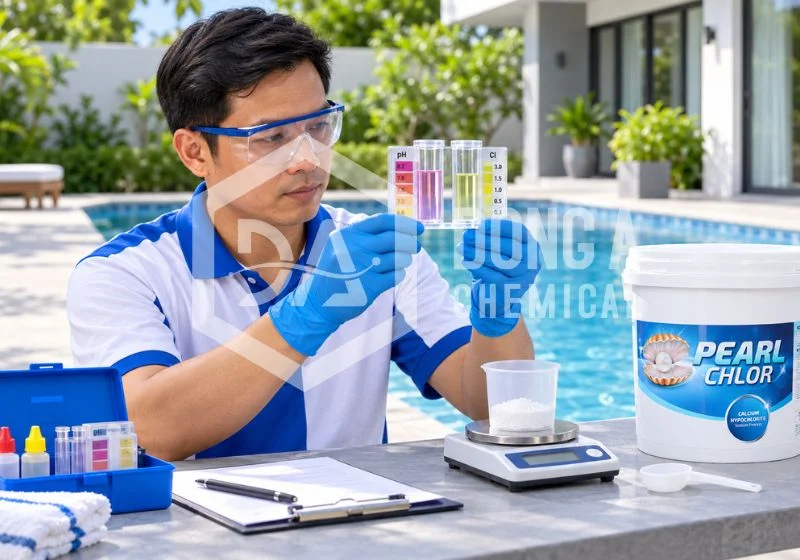
Swimming pool chlorine products are available in different formulations and available-chlorine concentrations. The required amount therefore depends on the product concentration, the volume of water being treated and the target chlorine level.
To prepare a chlorine stock solution at a specified percentage concentration, use the following formula:
m = (c × V ÷ C) × 1,000
Where:
- m is the mass of chlorine product required (g)
- c is the desired concentration of the prepared solution (%)
- C is the concentration of available chlorine in the original product (%)
- V is the required volume of solution (L)
Example: To prepare 20 litres of a 0.5% available-chlorine solution from a product containing 25% available chlorine, 400 g of product is required:
(0.5 × 20 ÷ 25) × 1,000 = 400 g
This formula is used to prepare a stock solution. The amount applied to the pool must still be calculated according to the pool volume, current free-chlorine reading, target residual and the product label. For routine operation, free chlorine is commonly maintained at 1–3 ppm, subject to applicable guidance and actual pool conditions.
Equipment Required for Mixing Chlorine
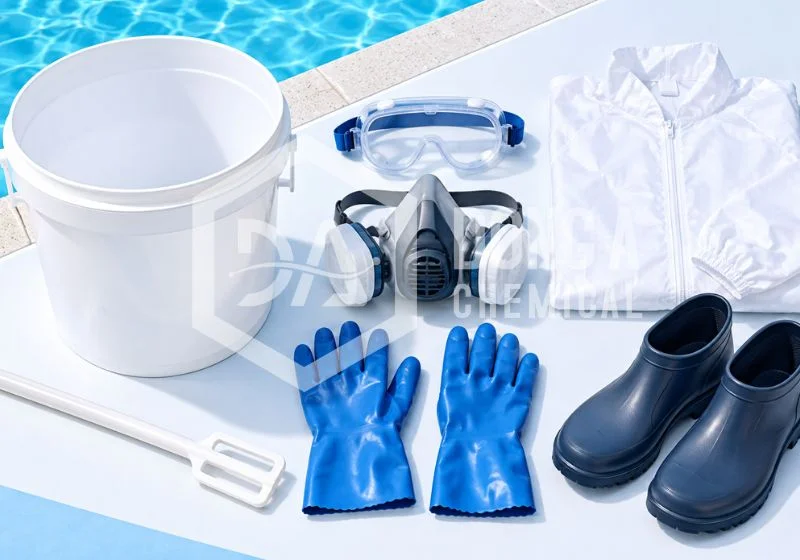
Before preparing a chlorine solution, gather the following equipment:
- Mixing container: A clean, dedicated, chemical-resistant plastic container with a capacity of approximately 20–30 L
- Stirring rod: A dedicated plastic stirring rod long enough to keep your hands away from the solution
- Chemical-resistant gloves: Thick gloves suitable for oxidising chemicals
- Respiratory protection: Appropriate protection specified in the product Safety Data Sheet (SDS); an ordinary face mask does not protect against chlorine gas
- Safety goggles: Close-fitting chemical splash goggles
- Protective clothing: Long sleeves, long trousers and closed footwear
Do not use aluminium or other reactive metal equipment. Calcium hypochlorite is a strong oxidising agent and can react dangerously with incompatible materials. Chemical-resistant plastic equipment is generally the safest choice for home use. Always check the product label and SDS before handling the chemical.
How to Mix and Apply Chlorine Safely and Effectively
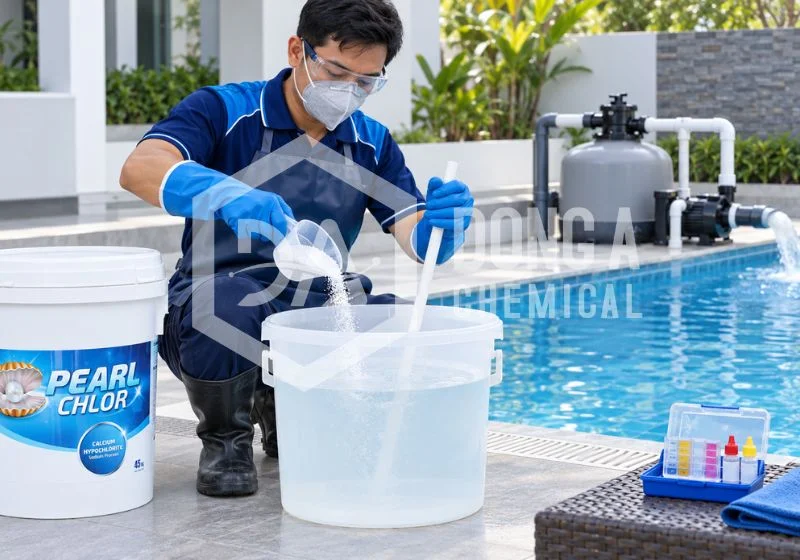
Chlorine is one of the main disinfectants used in swimming pool treatment. Follow these steps for safe and effective application:
Step 1: Test the Pool Water
Use a pool water test kit to measure pH and free chlorine before adding any chemical. For effective chlorination and swimmer comfort, the pH is commonly maintained between 7.2 and 7.6.
Step 2: Calculate the Required Dose
Calculate the dose based on the pool volume, current free-chlorine concentration, target level and percentage of available chlorine stated on the product label. Do not estimate the dose by eye.
Step 3: Prepare the Solution if Permitted by the Label
If the product instructions permit pre-dissolving, fill the dedicated container with clean water first, then slowly add the measured chlorine product to the water while stirring gently. Always add chlorine to water—never pour water onto chlorine. Work in a well-ventilated area and avoid creating dust or splashes.
Step 4: Apply the Chlorine to the Pool
With the circulation system running, distribute the prepared solution evenly around the pool in accordance with the product instructions. Never add chlorine through a skimmer if it may come into contact with other chemicals in the circulation system.
Step 5: Circulate and Retest the Water
Run the circulation pump for several hours to distribute the chemical evenly. Retest the water and maintain free chlorine at the required level, commonly 1–3 ppm for routine residential pool operation.
Do not allow anyone to enter the pool until the free-chlorine and pH readings have returned to the recommended range stated on the product label or required by local guidance.
Important Safety Precautions When Handling Chlorine
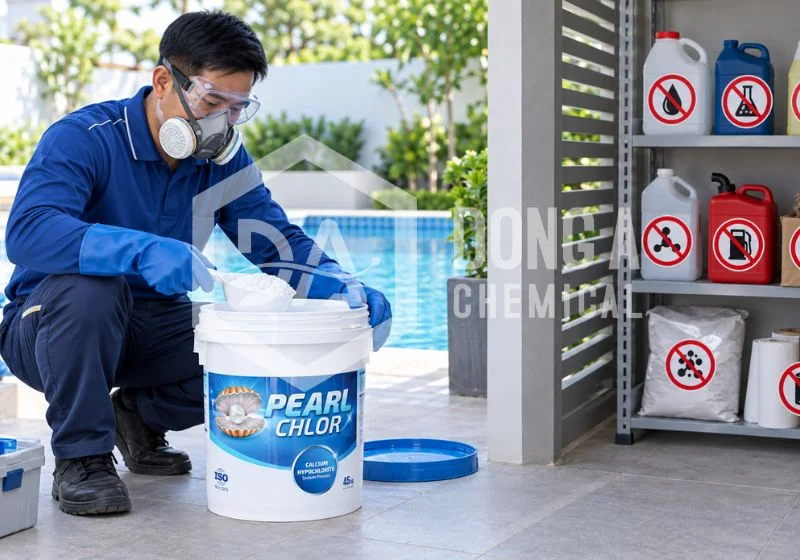
Whether you are using calcium hypochlorite 70% or preparing a 100 ppm chlorine solution, observe the following precautions:
- Wear suitable chemical splash goggles, chemical-resistant gloves and protective clothing.
- Handle and apply chlorine in a well-ventilated, shaded area. Ultraviolet light accelerates chlorine degradation.
- Use only the calculated dose. Excessive chlorination can irritate the eyes and skin, damage pool equipment and make the water unsafe for swimming.
- Never mix chlorine with acids, ammonia, cleaning products or any other pool chemicals. Mixing incompatible chemicals can release toxic gas or cause fire or explosion.
- Use only a chlorine product specifically labelled for swimming pool treatment and follow the manufacturer’s directions.
- Store chlorine in its original, tightly closed container in a cool, dry and well-ventilated place, away from sunlight, heat, moisture, fuels, organic materials and other chemicals.
- Keep the product locked away from children and pets.
- Purchase chlorine from a reputable supplier and check the label, available-chlorine content, batch information, expiry date and accompanying technical documents.
Cleaning Chlorine-Mixing Equipment
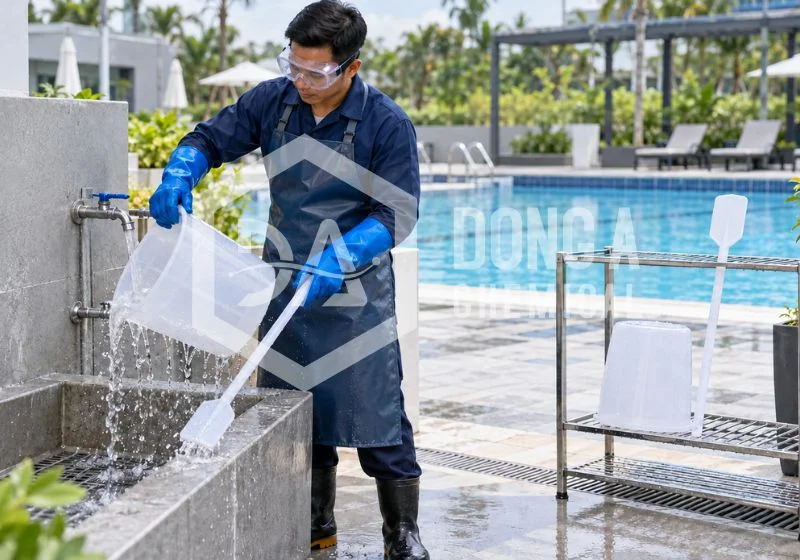
Cleaning and segregating equipment before and after use helps prevent contamination and dangerous contact between incompatible chemicals.
- Use dedicated equipment for chlorine only. Never reuse the container or stirring rod for acids, detergents or other pool chemicals.
- After use, follow the product label and SDS. Where permitted, rinse the container and stirring rod thoroughly with plenty of clean water in a safe, well-ventilated location. Do not return rinsing water to the original chemical container.
- Rinse reusable gloves according to the manufacturer’s instructions and allow them to dry in a ventilated area. Replace gloves that are cracked, discoloured or damaged.
- Do not wash and reuse disposable masks, respirator filters or cartridges. Maintain reusable respiratory protective equipment strictly according to the manufacturer’s instructions.
- Rinse goggles with clean water and wipe them with a soft cloth. Avoid household cleaners that may react with chlorine residues or damage the lens coating.
- Once dry, store all dedicated equipment separately from other household and pool-maintenance tools, out of the reach of children.
What to Do in the Event of a Chlorine Spill
The correct response depends on the product form and the size of the spill. Always follow the product label and SDS. For a small spill that can be handled safely:
- Keep children, older people, pets and all unnecessary personnel away from the area.
- Move upwind and ventilate the area from a safe position. Do not enter an enclosed area if there is a strong chlorine odour or visible fumes.
- Avoid breathing dust or vapour. Wear the protective equipment specified in the SDS.
- Keep spilled dry chlorine away from water, oils, fuels, sawdust, paper, cloth and other organic or combustible materials.
- Do not use household vacuum cleaners or return spilled material to the original container. Use clean, dry, dedicated tools to collect the material into a compatible, clearly labelled container, in accordance with the SDS and local hazardous-waste requirements.
- Do not place chlorine waste in ordinary household rubbish.
For a large spill, fire, strong odour, visible gas release or any situation you cannot control safely, leave the area and contact the fire and rescue service or an appropriately qualified hazardous-materials contractor.
- If chlorine comes into contact with the skin, immediately remove contaminated clothing and rinse the affected area with plenty of running water for at least 15 minutes.
- If it enters the eyes, rinse cautiously with clean water for at least 15–20 minutes, remove contact lenses if this is easy to do and continue rinsing.
- If chlorine dust or gas is inhaled, move the affected person to fresh air without putting yourself at risk. Seek urgent medical advice, particularly if there is coughing, breathing difficulty, chest tightness, persistent irritation or eye pain.
- Do not attempt to neutralise a spill with sodium thiosulfate or another chemical unless the product SDS or a trained professional specifically instructs you to do so. Incorrect neutralisation may generate heat, splashes or hazardous gases.
Where to Buy Reliable Swimming Pool Chlorine
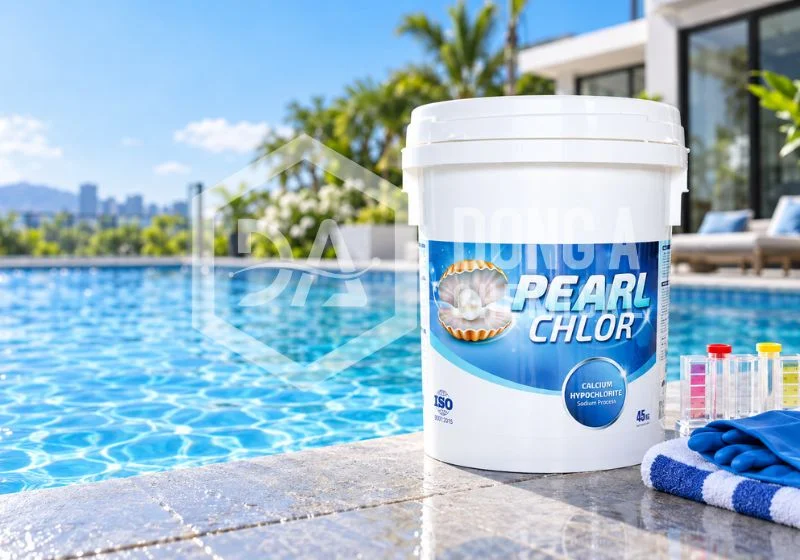
Knowing how to use calcium hypochlorite 70% correctly is only part of safe pool maintenance. Choosing a reliable supplier is equally important, as product quality, available-chlorine content and proper documentation directly affect treatment performance.
With extensive experience in the manufacture and distribution of chlorine products, Dong A Chemical is a leading Vietnamese supplier committed to delivering consistent product quality and dependable before- and after-sales support.
- Manufactured in Vietnam with documentation demonstrating product origin and quality
- Competitive factory-direct pricing for bulk orders
- Large-scale production capacity serving applications including swimming pools, municipal and industrial water treatment, domestic wastewater treatment and aquaculture
- Professional technical support on product selection, dosage, use and storage
- Dedicated transport fleet and nationwide delivery capability
For product information or the latest quotation, please contact Dong A Chemical at Tel/WhatsApp/Viber/Zalo: +84 342 597 726. We serve businesses across Vietnam and place customer safety, product quality and long-term value at the centre of our service.
We hope this guide has helped you understand how to prepare and use chlorine for home swimming pool disinfection safely and effectively. If you have any questions about chlorine products or their use, please leave a comment below and our technical team will be pleased to assist you.
Safety note: This article provides general guidance only. Always follow the product label, Safety Data Sheet and applicable local regulations. Where the label differs from this article, the label and SDS take precedence.
Related Articles
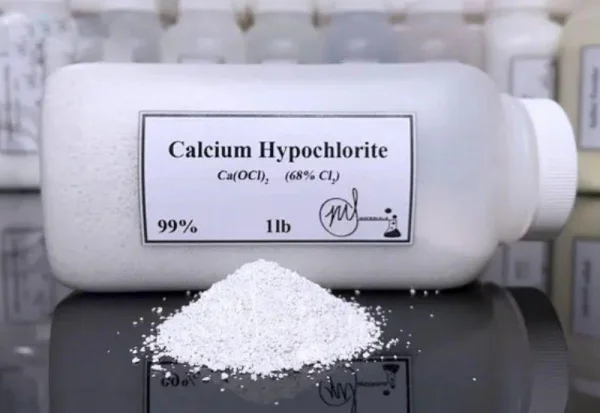
What is Calcium Hypochlorite? An Overview
Calcium hypochlorite , with the molecular formula Ca(ClO) 2 , is a widely used chemical compound ...
Compared Calcium Hypochlorite to Other Chlorine-based Disinfectants
Calcium hypochlorite is one of the most commonly used chlorine-based disinfectants. Chlorine-based ...
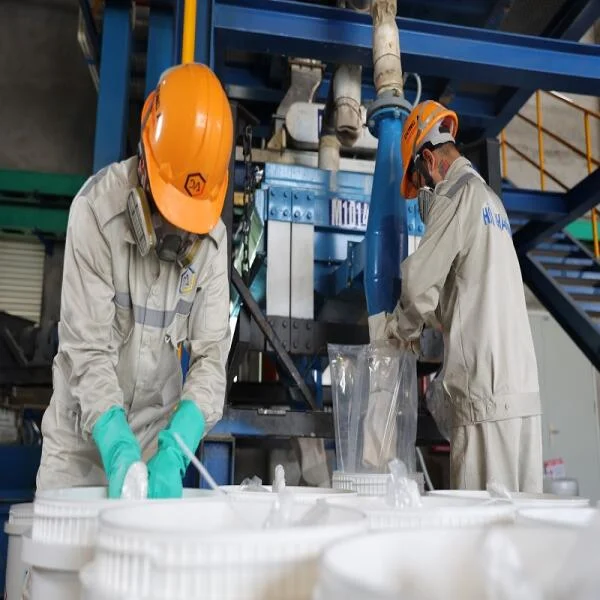
Industrial Calcium Hypochlorite Production Process
Calcium hypochlorite is a white or light gray powder widely used as a disinfectant, bleaching agent, ...
DONG A CHEMICAL SEEKS DISTRIBUTORS FOR CALCIUM HYPOCHLORITE (HS CODE 282810) IN SOUTHEAST ASIA
The rapid growth of water treatment, aquaculture, and textile industries across Southeast Asia is ...
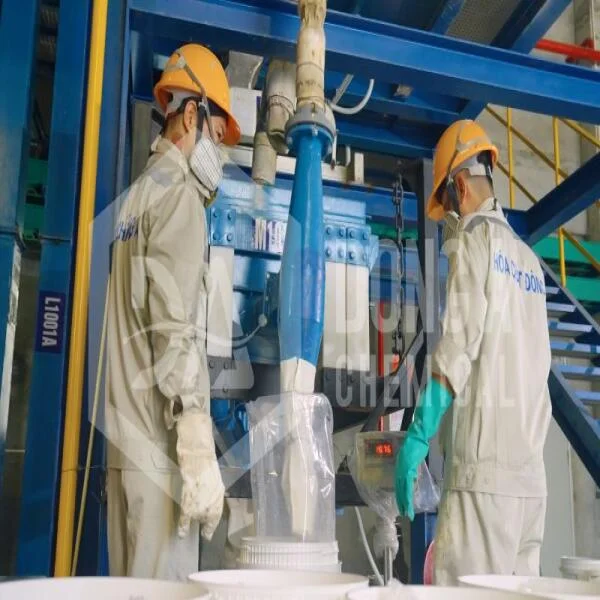
Understanding Calcium Hypochlorite Through Its Material Safety Data Sheet (MSDS)
Calcium Hypochlorite, also known as chlorine powder or chlorin, has the chemical formula Ca(OCl)₂. ...