

Industrial Calcium Hypochlorite Production Process
Calcium hypochlorite is a white or light gray powder widely used as a disinfectant, bleaching agent, and water treatment chemical. It is an important chemical compound applied in various industries, including swimming pools, wastewater treatment plants, and the production of other industrial chemicals.
There are two primary methods for producing calcium hypochlorite:
- Calcium Process
- Sodium Process
1. Calcium Hypochlorite Production via Calcium Process
Step 1: Preparation of Calcium Hydroxide
Calcium hydroxide (Ca(OH)₂) is produced by reacting calcium oxide (CaO) with water (H₂O):
CaO+H2O→Ca(OH)2CaO + H₂O → Ca(OH)₂CaO+H2O→Ca(OH) 2
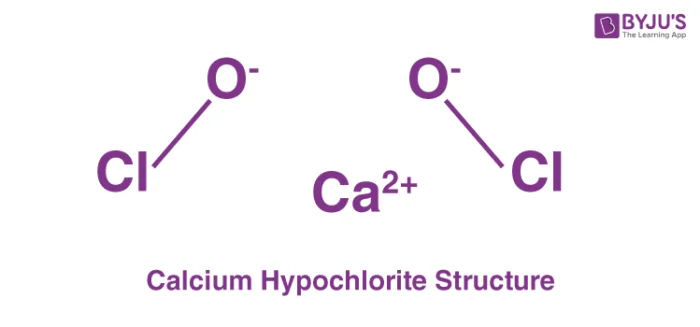
This is an exothermic reaction, producing calcium hydroxide as a white or light gray powder that is slightly soluble in water.
Step 2: Chlorination of Calcium Hydroxide
Calcium hydroxide is then reacted with chlorine gas (Cl₂):
Ca(OH)2+2Cl2→Ca(ClO)2+2H2OCa(OH)₂ + 2Cl₂ → Ca(ClO)₂ + 2H₂OCa(OH)2+2Cl2→Ca(ClO)2+2H2O
- This reaction is highly exothermic and must be carefully controlled to prevent overheating.
- Continuous agitation is required to ensure uniform mixing and temperature stability.
Step 3: Drying and Packaging
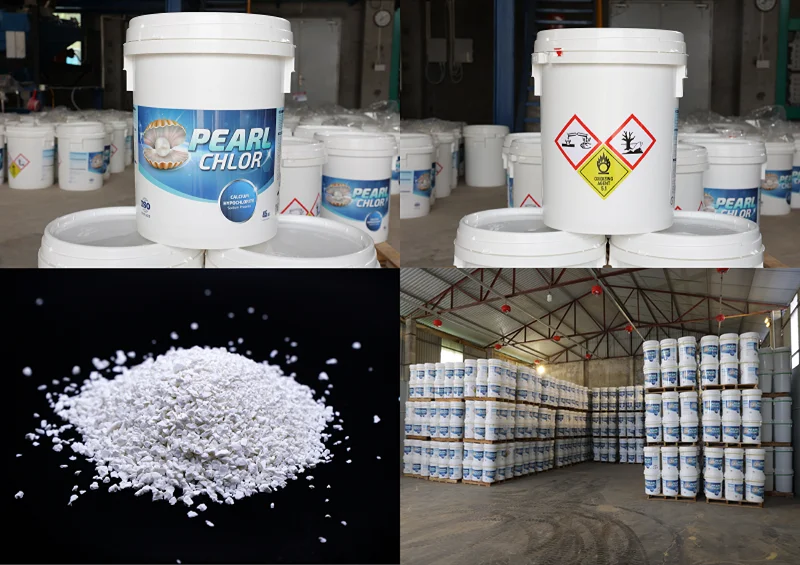
The resulting calcium hypochlorite is a white or light gray hygroscopic powder, capable of absorbing moisture from the air.
- It is dried to remove residual water
- Then packaged in airtight containers to prevent exposure to moisture and sunlight, which may cause decomposition
2. Calcium Hypochlorite Production via Sodium Process
The sodium process is widely used due to its simplicity and cost efficiency.
Process Overview
This method involves:
- Producing sodium hypochlorite (NaClO) as an intermediate
- Reacting it with calcium hydroxide to produce calcium hypochlorite
Reaction Mechanism
Reaction 1: Sodium Hypochlorite Formation
NaOH+Cl2→NaClO+NaClNaOH + Cl₂ → NaClO + NaClNaOH+Cl2→NaClO+NaCl
- Occurs at room temperature
- Exothermic reaction
- Sodium hypochlorite is unstable, so it is used immediately as an intermediate
Reaction 2: Calcium Hypochlorite Formation
2NaClO+Ca(OH)2→Ca(ClO)2+2NaOH2NaClO + Ca(OH)₂ → Ca(ClO)₂ + 2NaOH2NaClO+Ca(OH)2→Ca(ClO)2+2NaOH
- Occurs at a higher temperature than Reaction 1
- Also exothermic
- Produces stable calcium hypochlorite as the final product
3. Equipment Requirements
The production of calcium hypochlorite requires specialized equipment to ensure safe and efficient operation, including:
- Reactor Vessel: Stainless steel or glass-lined reactor for controlled reactions
- Agitator/Mixer: Mechanical or magnetic stirrer for uniform mixing
- Chlorine Gas Cylinder/System: Supplies chlorine for chlorination
- Drying Equipment: Drying oven or fluidized bed dryer to remove moisture
- Packaging System: Airtight filling and sealing equipment
4. Safety Considerations
Calcium hypochlorite production is a hazardous process requiring strict safety measures:
- Personal Protective Equipment (PPE): Goggles, gloves, respirators
- Ventilation Systems: Prevent chlorine gas accumulation
- Emergency Equipment: Safety showers, eyewash stations, fire extinguishers
- Training: Workers must be trained in handling hazardous chemicals
- Maintenance: Regular inspection to prevent leaks and equipment failure
5. Comparison: Calcium Process vs Sodium Process
Criteria | Calcium Process | Sodium Process |
Chemical Formula | Ca(ClO)₂ | Ca(ClO)₂ |
Available Chlorine | 60–65% | 65–70% |
Moisture Content | ~5% | 5.5–10% |
Chlorine Loss (Annual) | <10% | <5% |
Physical Form | White granules, strong chlorine odor | Uniform white granules, mild odor |
Density (g/cm³) | 0.8–0.85 | 1.0–1.05 |
Decomposition Temperature | 70–80°C | 100–120°C |
Stability | Lower stability, absorbs moisture easily | Higher thermal stability, less hygroscopic |
Key Observations
- Calcium Process Products
- Similar to bleaching powder
- High CaCl₂ content
- More prone to moisture absorption and decomposition
- Lower stability during storage
- Sodium Process Products
- Higher available chlorine
- Better whiteness and purity
- Reduced moisture absorption
- Significantly higher thermal stability
- Considered a more advanced production technology
6. Applications
Calcium hypochlorite is primarily used in:
- Water treatment (drinking water, wastewater)
- Swimming pool disinfection
- Aquaculture
- Public sanitation and epidemic prevention
- Household and industrial disinfection
7. Dong A Chemical – Product Advantages
Dong A Chemical Joint Stock Company is a pioneering private manufacturer in Vietnam, specializing in core chemical products such as:
- Sodium Hydroxide (NaOH)
- Hydrochloric Acid (HCl)
- PAC
- Sodium Hypochlorite (Javen)
- Liquid Chlorine
- Calcium Hypochlorite
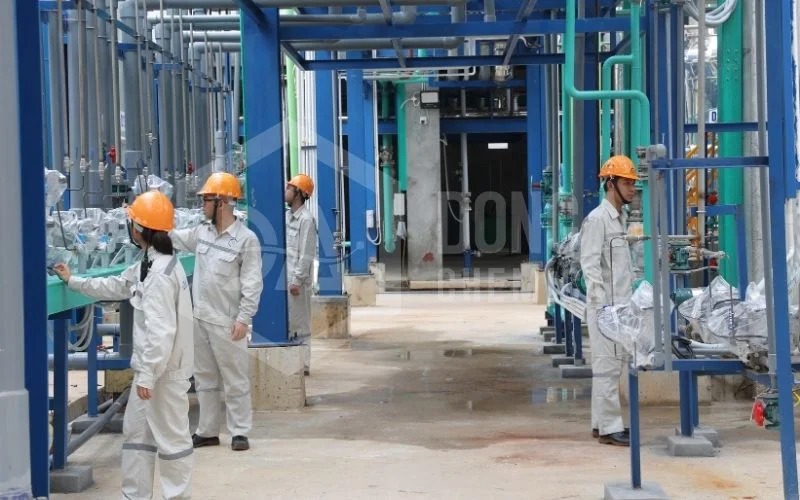
The company is currently developing a calcium hypochlorite production plant using sodium process technology, with the following advantages:
- Available chlorine content: 65–70%
- Low annual chlorine loss: <5%
- Uniform white granules with mild chlorine odor
- High density and improved stability
- Superior thermal resistance compared to calcium process products
Key Benefits
- Higher product purity and consistency
- Reduced moisture absorption
- Enhanced storage stability
- Advanced drying and densification technology
8. Main Applications of Dong A Calcium Hypochlorite
- Drinking water treatment
- Swimming pools
- Household disinfection
- Aquaculture
- Environmental sanitation
- Disease control
If you need more references about our water treatment products, please go to the official website of Dong A Chemical at dongachem.com or call a hotline (+84)342 597 726 to receive advice and support from the experienced consultant.
Related Articles
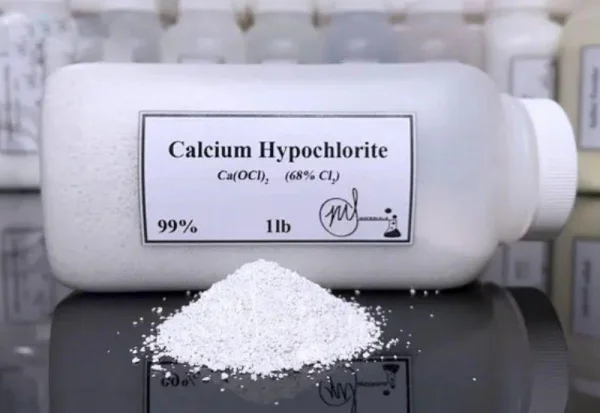
What is Calcium Hypochlorite? An Overview
Calcium hypochlorite , with the molecular formula Ca(ClO) 2 , is a widely used chemical compound ...