

Understanding Calcium Hypochlorite Through Its Material Safety Data Sheet (MSDS)
Calcium Hypochlorite, also known as chlorine powder or chlorin, has the chemical formula Ca(OCl)₂. It is a widely used disinfectant in daily life. Let Dong A guide you through this product based on its Material Safety Data Sheet (MSDS).
SECTION I: IDENTIFICATION OF THE SUBSTANCE AND SUPPLIER
1. Substance Information
Product Name | Common Name | Trade Name | CAS No | UN No | EC No | HMIS Classification (USA) |
Calcium Hypochlorite | Calcium Hypochlorite | Chlorine | 7778-54-3
| 1748 | 231-908-7 | Health Hazard: 3 Flammability: 0 Reactivity: 2 Personal Protection: J |
2. Recommended Uses and Restrictions
Used for disinfection of drinking water and swimming pools. Calcium Hypochlorite is also used in toilet cleaners, household disinfectants, and for controlling moss and algae.
3. Manufacturer Information
Dong A Chemical Joint Stock Company
Area 9, Phu Ninh Commune, Phu Tho Province, Vietnam
Tel: +84 210 652 3333
Email: kinhdoanh@dongachem.vn
4. Emergency Contact
Dong A Chemical Joint Stock Company
Tel: +84 210 652 3333
Email: kinhdoanh@dongachem.vn
SECTION II: HAZARD IDENTIFICATION
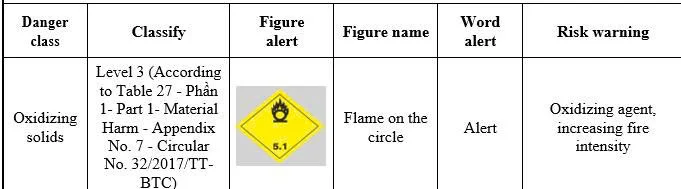
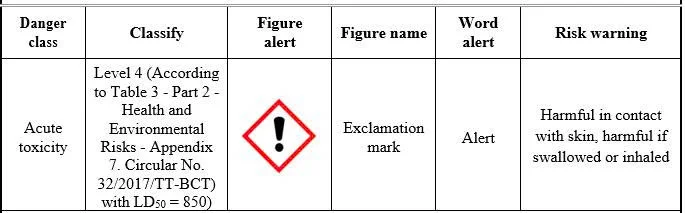
1. GHS Classification
1.1 Physical Hazards
1.2 Health Hazards
2. Hazard Statements
- H272: May intensify fire; oxidizer
- H302: Harmful if swallowed
- H314: Causes severe skin burns and eye damage
- H400: Very toxic to aquatic life
3. Precautionary Statements
- P210: Keep away from heat/sparks/open flames/hot surfaces – No smoking
- P220: Keep away from clothing and combustible materials
- P221: Take precautions to avoid mixing with combustibles
- P260: Do not breathe dust/fume/gas/mist/vapors
- P264: Wash thoroughly after handling
- P270: Do not eat, drink or smoke when using this product
- P273: Avoid release to the environment
- P280: Wear protective gloves/clothing/eye/face protection
- P284: Wear respiratory protection
- P301+P312: IF SWALLOWED: Call a poison center/doctor immediately
- P301+P330+P331: Rinse mouth. Do NOT induce vomiting
- P303+P361+P353: IF ON SKIN: Remove contaminated clothing. Rinse skin with water
- P304+P340: IF INHALED: Move to fresh air
- P305+P351+P338: IF IN EYES: Rinse cautiously with water for several minutes
- P310: Immediately call a poison center/doctor
- P321: Specific treatment required
- P330: Rinse mouth
- P363: Wash contaminated clothing before reuse
- P370+P378: In case of fire: Use dry powder extinguisher
- P391: Collect spillage
- P405: Store locked up
- P501: Dispose of contents/container in accordance with regulations
4. Other Hazards
No additional information available.
SECTION III: COMPOSITION / INFORMATION ON INGREDIENTS
Component | CAS No | Chemical Formula | Content (% |
Calcium Hypochlorite | 7778-54-3 | Ca(OCl)2 | ≥ 65 % |
SECTION IV: FIRST AID MEASURES
1. Description of First Aid Measures
- Eye Contact: Rinse immediately with water for at least 15 minutes. Seek medical attention.
- Inhalation: Move to fresh air, keep at rest, seek medical attention.
- Skin Contact: Remove contaminated clothing, rinse thoroughly with water.
- Ingestion: Do not induce vomiting. Seek immediate medical attention.
2. Symptoms and Effects
Not classified as carcinogenic (OSHA, ACGIH). Not mutagenic or toxic to reproduction. Harmful to lungs and mucous membranes.
3. Medical Attention
Treat symptomatically under physician guidance.
SECTION V: FIRE-FIGHTING MEASURES
Flammability | Hazard | Extinguishing Media | Protective Equipment | Special Hazards |
Non-flammable | Strong oxidizer, may intensify fire
| Water spray (DO NOT use CO₂ or ammonium-based extinguishers)
| Wear full protective gear and respirator
| May accelerate combustion under heat
|
SECTION VI: ACCIDENTAL RELEASE MEASURES
- Evacuate area and isolate hazard zone
- Avoid contact and inhalation
- Prevent entry into drains and waterways
- Use absorbent materials (sand, soil)
- Notify authorities if uncontrolled
SECTION VII: HANDLING AND STORAGE
Handling
- Avoid inhalation and contact
- Keep away from ignition sources
- Follow operational procedures strictly
Storage
- Store in a well-ventilated, cool, dry area
- Keep away from sunlight and incompatible materials
- Keep containers tightly closed
SECTION VIII: EXPOSURE CONTROLS / PERSONAL PROTECTION
- Eye Protection: Safety goggles
- Skin Protection: Protective clothing
- Hand Protection: Chemical-resistant gloves
- Foot Protection: Safety boots
- Respiratory Protection: Suitable respirator
- Prefer certified PPE (e.g., 3M)
SECTION IX: PHYSICAL AND CHEMICAL PROPERTIES
Appearance: powder/granules | Odor: Chlorine-like |
Color: White or off-white | Melting Point: 100°C |
Odor: Chlorine-like | Flash Point (°C): No data available |
Vapor Pressure (mm Hg) at standard temperature and pressure: No data available | Auto-ignition Temperature (°C): No data available |
Vapor Density (Air = 1) at standard temperature and pressure: No data available | Upper Flammability Limit (% by volume in air): No data available |
Solubility: Soluble in water | Lower Flammability Limit (% by volume in air): No data available |
Moisture Content (%): ≤ 10% | Evaporation Rate: No data available |
Density (kg/m³): 2,350 at 20°C | Molecular Weight: 142.99 g/mol |
SECTION X: STABILITY AND REACTIVITY
- Decomposes rapidly in air and under heat (~177°C)
- Strong oxidizer
- Reacts with acids releasing chlorine gas
- Reacts with ammonium compounds → explosion risk
- Incompatible with water, organics, flammable materials
SECTION XI: TOXICOLOGICAL INFORMATION
- Routes: Skin, eyes, inhalation, ingestion
- Effects: Burns, eye damage, lung irritation
- LD50 (oral, rat): 850 mg/kg
- Not classified as carcinogenic
SECTION XII: ECOLOGICAL INFORMATION
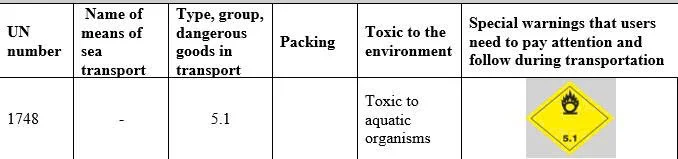
- Highly toxic to aquatic organisms
- May cause environmental pollution if released
- Not biodegradable by bacteria
SECTION XIII: DISPOSAL CONSIDERATIONS
Dispose of in accordance with hazardous waste regulations (Circular No. 02/2022/TT-BTNMT).
SECTION XIV: TRANSPORT INFORMATION
SECTION XV: REGULATORY INFORMATION
Complies with Vietnamese chemical laws and regulations, including:
- Law on Chemicals No. 69/2025/QH15
- Decrees 24/2026, 25/2026, 26/2026
- Circulars 01/2026/TT-BCT, 02/2026/TT-BCT
- Decree 34/2024/NĐ-CP on dangerous goods transportation
CONCLUSION
The above information summarizes the MSDS of Calcium Hypochlorite. We hope this document provides useful insights to help you handle and use the product safely and effectively.
For further information, please contact: Tel/WhatsApp/Viber/Zalo: +84 342 597 726
Related Articles
Chlorine 70: The Powerful Disinfectant
Chlorine is a powerful chemical with strong oxidizing and disinfecting properties. It is widely used ...
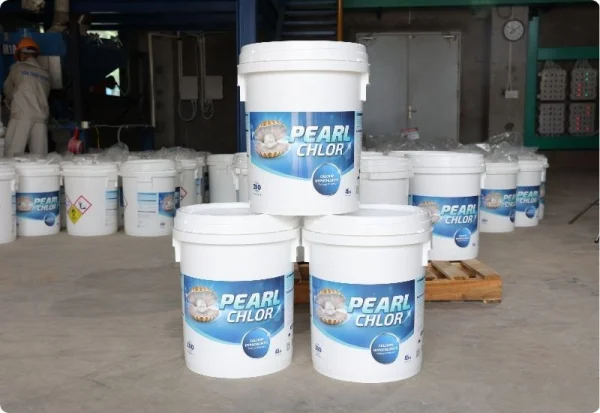
Dong A Chemical – Global Chlorine Supplier
Dong A Chemical - Manufacturer and Global Supplier of Chlorine. Owning a large-scale production ...
Compared Calcium Hypochlorite to Other Chlorine-based Disinfectants
Calcium hypochlorite is one of the most commonly used chlorine-based disinfectants. Chlorine-based ...
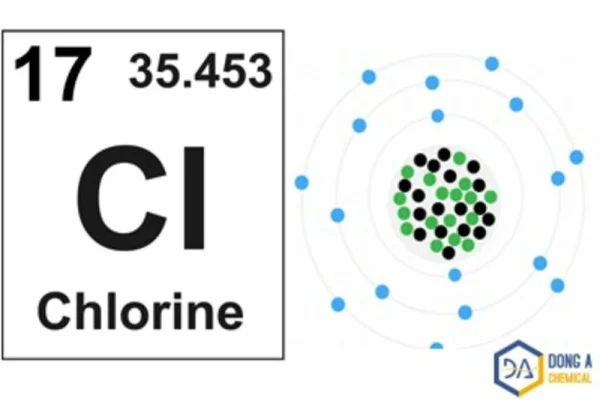
What is Chlorine? Properties and Applications of Chlorine Compound in Life
Chlorine is one of the simplest and most common compounds in chemistry. It was discovered in the ...
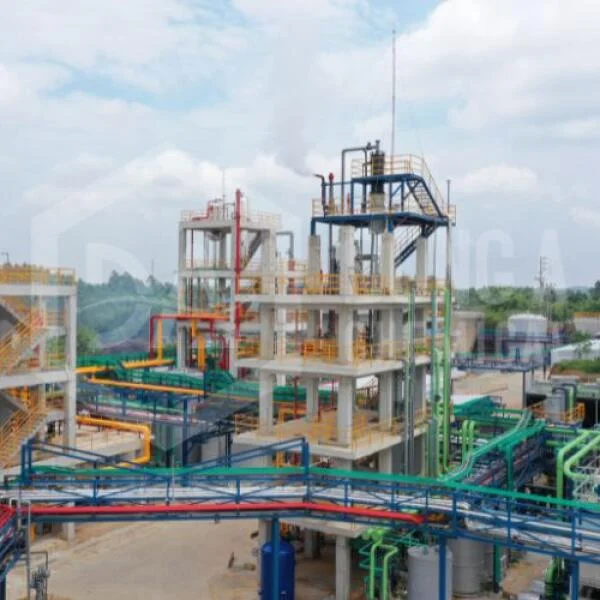
Dong A Chemical Joint Stock Company Builds Vietnam’s First Large-Scale Chlorine Plant
With the goal of supplying customers with a full range of chlor-alkali chemicals, including ...