

Pool Water Treatment Chemicals for Commercial Pools
Commercial swimming pools use four main groups of water treatment chemicals. Disinfectants maintain a residual in the water, pH adjusters keep the water within its operating range, water balance chemicals control alkalinity and calcium hardness, and clarifiers help remove suspended particles when needed. Choosing the right product starts with water test results, the facility’s feed equipment, and the requirements that apply to the pool.
At a hotel, resort, or public aquatic facility, the same symptom can have several causes. Cloudy water, for example, can follow a busy afternoon, a circulation problem, or a change in water balance. Each calls for a different response. This guide explains what to measure, how the main chemicals differ, and what to verify before selecting or purchasing them.
What chemicals are used to treat swimming pool water?
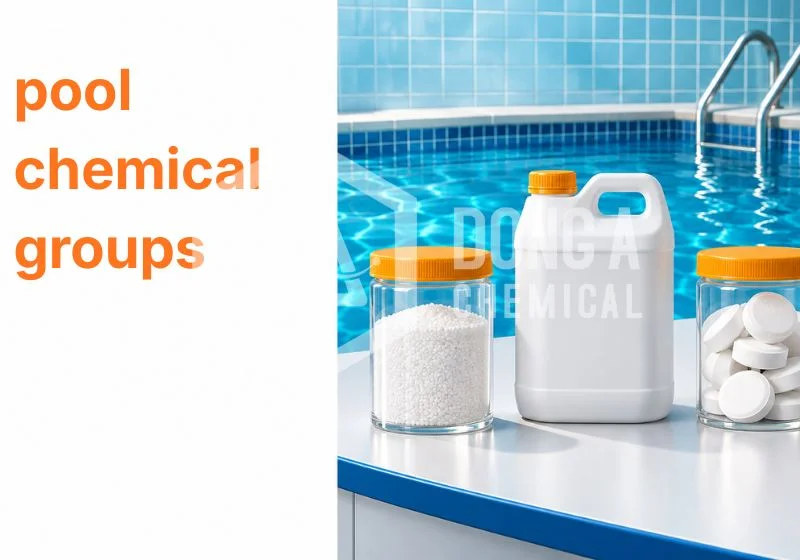
Disinfection and pH control are the core of routine chemical treatment. Other products are used when testing shows that the water needs adjustment or when a diagnosed clarity problem calls for help with particle removal.
Chemical group | Common examples | What it does |
Disinfectants | Calcium hypochlorite, sodium hypochlorite, trichlor | Maintains a disinfectant residual in the pool |
pH adjusters | Hydrochloric acid, sodium carbonate | Lowers or raises pH |
Water balance chemicals | Sodium bicarbonate, calcium chloride | Raises total alkalinity or calcium hardness, respectively |
Clarifiers and flocculants | Pool-labeled polymer or aluminum-based products | Helps remove suspended particles by a method suited to the system |
Chemical treatment works with circulation and filtration. Circulation distributes treated water throughout the pool, and filtration removes suspended matter. If flow drops or a filter is due for service, restoring system performance is part of correcting the water quality problem. NSW Health public swimming pool and spa advisory
Which water quality parameters should operators monitor?
For a chlorinated pool, start with free chlorine and pH. The free chlorine reading shows the residual measured in the water. pH affects the balance between hypochlorous acid (HOCl) and hypochlorite ion (OCl⁻). As pH rises, the share present as HOCl, the more effective disinfecting form, falls. Combined chlorine includes chloramines formed when chlorine reacts with nitrogen-containing contaminants such as those introduced by swimmers. Tracking combined chlorine can help an operator investigate persistent odor or irritation complaints. CDC public pool operations guidance
Parameter | What it tells the operator |
Free chlorine | Whether the measured residual meets the facility’s operating requirements |
Combined chlorine | Whether chloramine formation warrants investigation |
pH | Whether conditions support effective chlorination and acceptable water balance |
Total alkalinity | How strongly the water resists changes in pH |
Calcium hardness | How much dissolved calcium contributes to the water’s tendency to form scale or dissolve calcium-based surfaces |
Cyanuric acid (CYA) | How much stabilizer is present when CYA or stabilized chlorine is used |
Water clarity | Whether visibility or filtration performance needs immediate attention |
Available chlorine and free chlorine describe different measurements. Available chlorine is a product specification that expresses oxidizing capacity as a chlorine equivalent, usually as a percentage. Free chlorine is a reading taken from pool water, usually reported in milligrams per liter (mg/L) or parts per million (ppm). Product strength is one input to dosing. The water test verifies the residual after the chemical has been applied and has reacted with substances in the pool. Dong A Chemical guide to chlorine tablets
Set operating limits and testing frequency according to the rules that apply to the facility. The U.S. Centers for Disease Control and Prevention’s Model Aquatic Health Code, for example, distinguishes between venues that use cyanuric acid and those that operate without it when specifying minimum DPD free chlorine readings. Use the applicable local code and the facility’s operating procedures for targets, closure criteria, and reopening decisions. CDC Model Aquatic Health Code
Choosing a disinfectant for a commercial pool
The choice between calcium hypochlorite, sodium hypochlorite, and trichlor depends on what the product adds to the water and how the facility feeds and stores it. Two facilities with similar chlorine requirements may choose different products because they have different source water, storage space, or feed equipment.
Disinfectant | Typical form | What to consider |
Calcium hypochlorite (cal hypo) | Granules or purpose-made tablets | Adds calcium. Verify feeder compatibility and track calcium hardness. |
Sodium hypochlorite (liquid chlorine) | Liquid solution | Suits a compatible liquid metering system. Heat and storage time can reduce product strength. |
Trichlor (TCCA) | Commonly tablets | Adds cyanuric acid and can lower pH. Track CYA and verify that the product suits the feeder and venue. |
Calcium hypochlorite
Calcium hypochlorite, Ca(OCl)₂, is a solid source of unstabilized chlorine. It can be a practical option where the facility has compatible feed equipment and can manage the calcium it introduces. Review calcium hardness in both the pool and the make-up water. A facility that repeatedly tops up with hard water may have less room to accommodate additional calcium, especially when evaporation is high. Verify the exact product form and feed method on the label before purchase. Pool & Hot Tub Alliance calcium hypochlorite fact sheet
Sodium hypochlorite
Sodium hypochlorite, often called liquid chlorine, is an unstabilized chlorine source that can be delivered through a compatible metering pump. For sites with limited storage or long delivery intervals, check how long each shipment will remain in inventory. A large delivery may have a lower freight cost per unit, but prolonged storage and exposure to heat can reduce strength before the full shipment is used. Include storage conditions and delivery frequency when comparing suppliers. NSW Health public swimming pool and spa advisory
Trichlor and other treatment options
Trichloroisocyanuric acid, commonly called trichlor or TCCA, releases chlorine and introduces cyanuric acid. CYA helps protect chlorine from sunlight in outdoor pools. Continued use can raise CYA levels, so include CYA testing in the operating plan wherever stabilized products are used. Tablet shape alone tells the operator little about compatibility. Confirm the active ingredient and follow the equipment manufacturer’s instructions when evaluating a change of product. Dong A Chemical guide to chlorine tablets
Bromine-based products are another option where suitable for the venue and permitted by local rules. UV and ozone systems treat water as it passes through the equipment. Facilities that use them still need to maintain the disinfectant residual required in the pool itself. CDC Model Aquatic Health Code
Chemicals for pH, alkalinity, hardness, and water clarity
Choose the chemical for the parameter that needs adjustment
Hydrochloric acid, often sold as muriatic acid in the United States, lowers pH. Sodium carbonate, also known as soda ash, raises it. Sodium bicarbonate is used primarily to raise total alkalinity when the water lacks buffering capacity. The two sodium compounds serve different operating purposes, so use both pH and alkalinity readings to decide which correction the water needs. Calcium chloride raises calcium hardness when test results and the facility’s water balance criteria call for it. NSW Health public swimming pool and spa advisory
Investigate cloudy water before adding a clarifier
Check whether the pump and filters are operating as expected, whether cloudiness followed a rise in bather load, and whether water balance could be causing calcium to precipitate. A clarifier may help a compatible filter capture fine particles. Some flocculants are designed to settle particles for removal by vacuuming to waste. Verify which process the product requires. For polyaluminum chloride (PAC) or any other coagulant, confirm that the specific formulation is labeled for pool use and compatible with the facility’s treatment system. If clarity falls below the facility’s safety criteria, follow its closure and reopening procedures.
How to choose and buy pool water treatment chemicals
1. Start with the pool and its water. Record the pool volume, indoor or outdoor setting, expected bather load, and typical water test results. Include source-water hardness and alkalinity and, where applicable, the pool’s CYA trend.
2. Match the product to the equipment. Confirm that the active ingredient and physical form suit the feeder, chemical storage area, and operating procedures. Before switching disinfectants, have trained staff verify the changeover procedure with the equipment manufacturer.
3. Compare like for like. For chlorine products, compare delivered cost per kilogram of available chlorine on the same specification basis. Then account for delivery frequency, strength losses during storage where relevant, chemical handling, and feed equipment costs.
4. Verify the paperwork. Obtain the product label, technical data sheet (TDS), and safety data sheet (SDS). For a bulk purchase, ask for a certificate of analysis (COA) for the proposed grade or lot and verify any approvals required for the intended use in the destination market.
Testing and chemical handling in daily operation
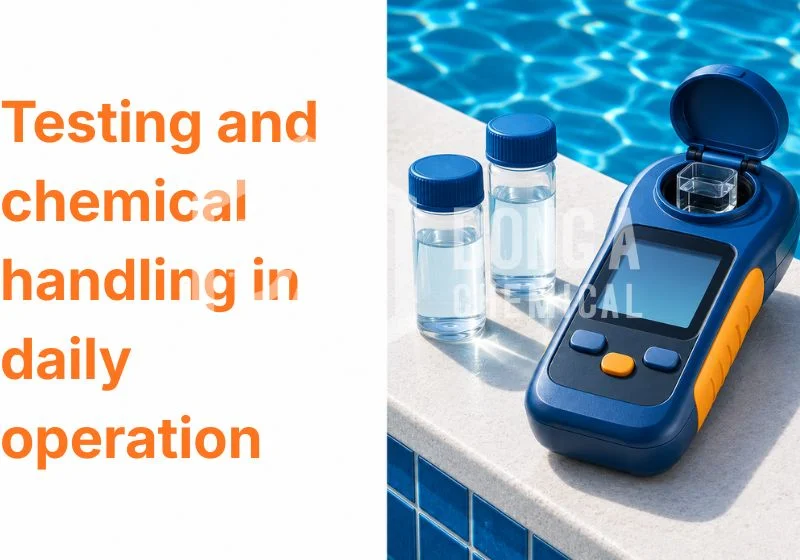
Use the facility’s approved test method and sampling procedure. If a reading falls outside the operating range, verify it as appropriate and review relevant system conditions, including recirculation, feeder operation, and chemical inventory. Follow the product label and the facility’s dosing procedure, then circulate, retest, and record the result. The operator log should show what changed, when it changed, and whether the follow-up reading met the applicable target. These records help the next shift distinguish an isolated event from a recurring equipment or water quality issue. CDC public pool operations guidance
Never mix chlorine products with acids or with other pool chemicals. Keep incompatible products segregated in storage and use dedicated handling equipment. Staff should follow the label and SDS for personal protective equipment and handling instructions. Prepare or dilute a chemical only as directed by its label and the site procedure. Use the facility’s written response procedures for spills, equipment failures, and water quality incidents. CDC pool chemical safety guidance ·
Sourcing calcium hypochlorite from Dong A Chemical
Dong A Chemical manufactures Pearl Chlor 70% calcium hypochlorite in Vietnam. The product specification lists at least 70% available chlorine. When requesting a quotation, share the intended application, destination country, and expected order volume. The export team can use those details to discuss the product specification, current TDS and SDS, and available packaging options.
Request product specifications and an export quotation
Frequently asked questions
- What chemicals does a commercial pool need every day?
A commercial pool needs to maintain its required disinfectant residual and pH during operation. How often the feed system adds chemicals depends on demand and the facility’s operating procedures. Use water test results to determine when alkalinity, calcium hardness, or other parameters need correction.
- Which is better for a pool, calcium hypochlorite or sodium hypochlorite?
Choose according to the feed system, water chemistry, and storage conditions. Calcium hypochlorite is a solid product that adds calcium. Sodium hypochlorite is a liquid that can be metered through compatible equipment, and its strength depends partly on storage conditions and age.
- Why does cyanuric acid rise when a pool uses trichlor?
Trichlor introduces cyanuric acid each time it is used. Chlorine is consumed during treatment while CYA can accumulate with repeated use. Track CYA separately and manage it within the requirements for the facility.
- Why is a pool cloudy when its chlorine reading is within range?
A chlorine reading measures disinfectant residual. Suspended particles, a circulation or filter problem, or calcium precipitation can still affect clarity. Check those causes and apply the facility’s visibility criteria before deciding how to correct the problem.
Related Articles
The Benefits and Best Application of Using Liquid Chlorine for Pool Maintenance
Using liquid chlorine for pools is one of the most effective methods for ensuring the water remains ...
Dong A Chemical Joint Stock Company Builds Vietnam’s First Large-Scale Chlorine Plant
With the goal of supplying customers with a full range of chlor-alkali chemicals, including ...
TCCA 90 (Chlorine 90): The Solution for Water Safety
TCCA 90 not only eradicates pathogenic microorganisms but also prevents the growth of unwanted algae ...
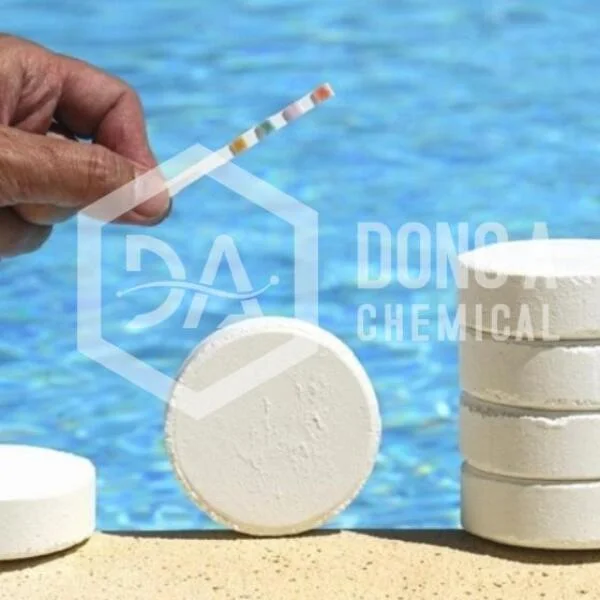
Chlorine Tablets: 8 Key Uses and Benefits for Pool Water Treatment
Chlorine tablets offer a convenient way to disinfect swimming pool water and maintain a chlorine ...