

Chlorine Tablets: 8 Key Uses and Benefits for Pool Water Treatment
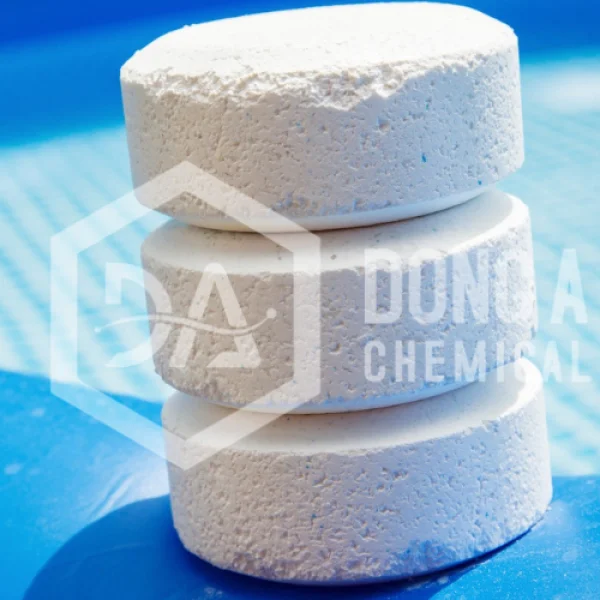
Chlorine tablets offer a convenient way to disinfect swimming pool water and maintain a chlorine residual between treatments. Used with suitable dosing equipment, regular water testing and effective filtration, they help control microorganisms and algae while supporting consistent water quality.
However, “chlorine tablets” describes a product form rather than a single chemical. Understanding the active ingredient is essential when choosing a product, calculating treatment requirements and maintaining a pool safely.
What Are Chlorine Tablets?
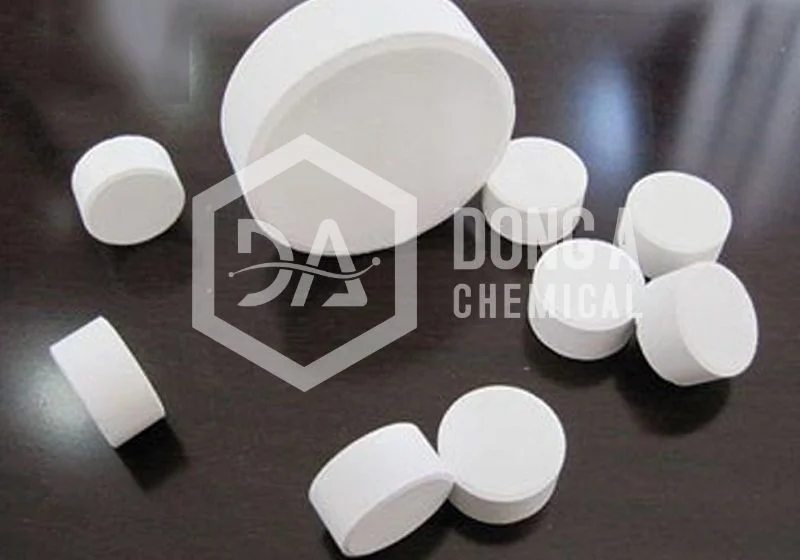
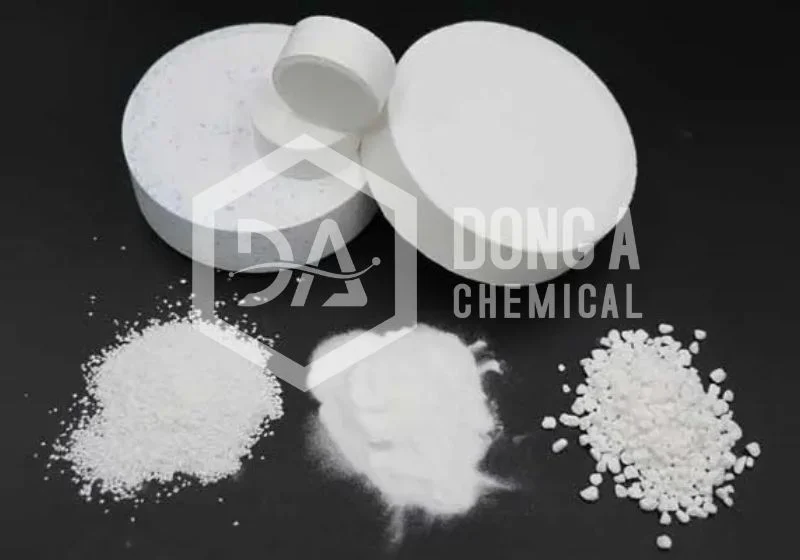
Many swimming pool chlorine tablets contain trichloroisocyanuric acid (TCCA), also called trichlor. Standard TCCA formulations commonly provide around 90% available chlorine, although the actual specification depends on the product.
Calcium hypochlorite is another chlorine-releasing disinfectant available in granular and some tablet formulations. It is chemically different from TCCA and requires compatible dosing equipment.
Available chlorine describes a product’s oxidizing capacity expressed as a chlorine equivalent. It is different from active-ingredient purity.
Always check the product label, technical data sheet (TDS) and safety data sheet (SDS) before use. www3.epa.gov
How Do Chlorine Tablets Work?
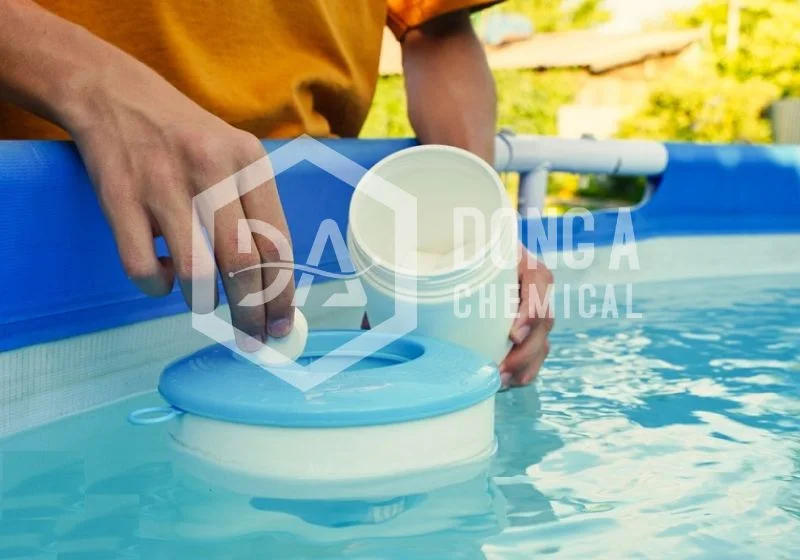
As chlorine tablets dissolve, they release chlorine into the water. The resulting disinfecting species, including hypochlorous acid (HOCl), inactivate many microorganisms.
Performance depends on free chlorine concentration, pH, contact time, water temperature and chlorine demand. TCCA also introduces cyanuric acid (CYA), which helps protect chlorine from sunlight but can slow disinfection when it accumulates.
Chlorination works alongside circulation, filtration and physical cleaning. Clear-looking water alone does not confirm that a pool is adequately disinfected. ICC
8 Key Uses and Benefits of Chlorine Tablets
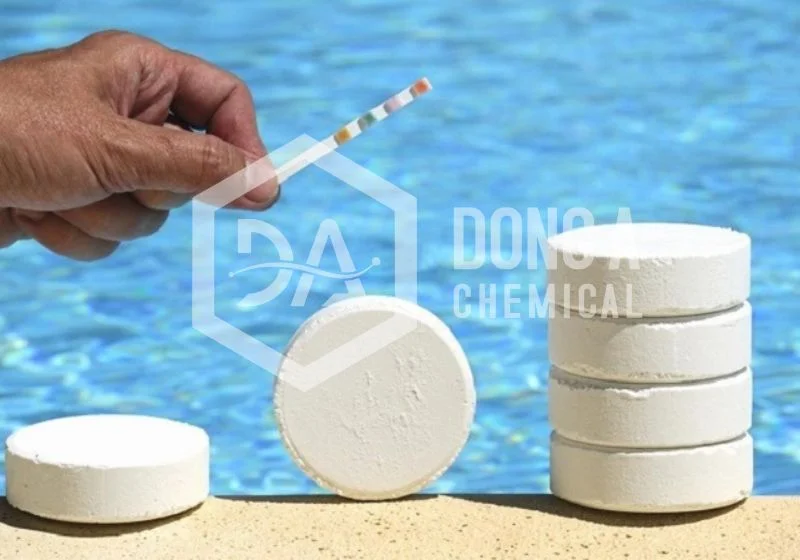
The points below cover both treatment functions and practical benefits of pool chlorine tablets.
1. Disinfecting Swimming Pool Water
The main purpose of chlorine tablets is to supply disinfectant for swimming pools. Maintaining an appropriate free chlorine residual helps inactivate many bacteria and other microorganisms introduced by swimmers and the environment.
Chlorine does not kill every pathogen instantly. Some organisms, particularly Cryptosporidium, are highly chlorine tolerant. CDC
2. Helping Prevent Algae Growth
Maintaining adequate chlorine can help prevent algae from becoming established. Routine brushing and effective filtration also contribute to algae control.
A pool that is already green may require a separate corrective treatment. Slow-dissolving maintenance tablets should not be assumed to replace an appropriate shock-treatment product.
3. Maintaining a Disinfectant Residual
Chlorine is consumed by contaminants and lost through environmental exposure. Tablets used in a compatible feeder can replenish chlorine as they dissolve, helping maintain a disinfectant residual between scheduled maintenance visits.
The feed rate must be adjusted to water-test results. www3.epa.gov
4. Oxidizing Some Organic Contaminants
Chlorine reacts with some organic contaminants introduced into the pool. This oxidation contributes to water treatment, but also consumes chlorine and can form disinfection by-products.
Reducing contamination through swimmer hygiene and physical cleaning helps limit chlorine demand. cdc.gov
5. Helping Protect Chlorine from Sunlight
TCCA supplies cyanuric acid as well as chlorine. In outdoor pools, cyanuric acid helps reduce chlorine loss caused by sunlight.
This benefit requires ongoing monitoring: repeated TCCA use can increase cyanuric acid concentrations and make disinfection more difficult to manage. ICC
6. Providing Controlled Release through Compatible Feeders
Slow-dissolving tablets can supply chlorine gradually through equipment designed for the specific formulation. Their dissolution rate depends on water flow, temperature, tablet composition and feeder settings.
Controlled release supports routine maintenance, but does not eliminate the need for water testing.
7. Simplifying Routine Chemical Handling
Preformed tablets can simplify routine loading into suitable dosing equipment. Operators can select the tablet size specified for their feeder and use the manufacturer’s dosing instructions.
Tablet count alone is not a reliable measure of treatment performance. Available chlorine content, pool volume and measured residuals must also be considered.
8. Supporting Hotel, Resort and Commercial Pool Maintenance
Compatible tablet-feeding systems can be incorporated into maintenance programs for hospitality and other commercial pools.
These facilities still require trained operators, documented water testing and reliable circulation and filtration. Suitability depends on the pool’s operating conditions and local requirements. cdc.gov
TCCA Tablets vs. Calcium Hypochlorite: What Is the Difference?
Feature | TCCA tablets | Calcium hypochlorite |
Chemical name | Trichloroisocyanuric acid | Calcium hypochlorite |
Common product form | Tablets; also granules | Granules; some tablet formulations |
Available chlorine | Often around 90%; verify the specification | Grade-dependent; Pearl Chlor 70% specifies at least 70% |
Cyanuric acid contribution | Adds cyanuric acid | Does not add cyanuric acid |
Effect on water chemistry | Generally lowers pH and contributes to alkalinity demand | Generally raises pH initially and adds calcium |
Equipment requirement | Equipment compatible with the exact TCCA product | Equipment compatible with the exact calcium hypochlorite product |
These differences affect product selection and water-balance management. ICC
Never mix TCCA with calcium hypochlorite. Do not load either product into a feeder containing residues of the other. health.ny.gov
How to Use Chlorine Tablets in a Swimming Pool
Step 1: Confirm the Product and Pool Volume
Identify the active ingredient, available chlorine content and tablet weight. Confirm the pool’s water volume and read the directions for both the chemical and dosing equipment.
Step 2: Test the Water
Measure free chlorine and pH before adjusting treatment. Monitor cyanuric acid when using stabilized chlorine, and check total alkalinity and calcium hardness as part of the maintenance program.
For reference, CDC recommends a pH of 7.0–7.8 and at least 2 ppm free chlorine in pools using cyanuric acid or stabilized chlorine. These reference values do not replace local operating requirements or the product label. CDC
Step 3: Use Compatible Dosing Equipment
Use the feeder or dispensing device specified by the product manufacturer. Do not place tablets directly on pool surfaces. Use a skimmer basket only where both the chemical label and equipment instructions explicitly permit it.
Do not crush tablets or prepare a concentrated solution unless the product instructions specifically authorize that procedure.
Step 4: Adjust Feeding and Retest
Operate circulation as instructed, adjust the feed rate and retest the water. CDC recommends testing chlorine and pH at least twice daily, and more frequently during heavy use.
Keep swimmers out whenever water quality falls outside the applicable operating limits. cdc.gov
How Many Chlorine Tablets Does a Pool Need?
There is no universal tablet-per-cubic-meter dose. Requirements depend on:
- Tablet composition and size.
- Available chlorine content.
- Pool water volume.
- Existing free chlorine concentration.
- Chlorine demand and sunlight exposure.
- Tablet dissolution rate and feeder settings.
For example, a 20 g tablet containing 90% available chlorine contains approximately 18 g of available chlorine. If fully dissolved in 1 m³ of water, its theoretical contribution would be 18 mg/L, or 18 ppm, before chlorine consumption and losses.
This calculation explains why “one 20 g tablet per 1 m³” should not be published as a universal maintenance dose. Actual dosing must follow the product label and be verified through water testing.
Safety and Storage Precautions
Correct storage and handling are essential for chlorine-releasing chemicals.
- Wear the protective equipment specified in the SDS, including suitable chemical-resistant gloves and eye protection.
- Never mix chlorine products with acids, ammonia, other chlorine formulations or incompatible materials.
- Keep tablets dry and in their original labeled containers, away from heat, sunlight and incompatible chemicals.
- Use clean, dedicated handling tools and restrict access to trained personnel.
- Follow the manufacturer’s storage conditions and emergency procedures. CDC
If exposure occurs, follow the product’s first-aid instructions and seek medical or poison-center advice promptly. For eye or skin exposure, product labels commonly require immediate rinsing with water for 15–20 minutes. www3.epa.gov
If chlorine is excessive, stop dosing, restrict swimming and retest. Any corrective treatment should follow an approved procedure. Dissolved oxygen is not a dependable method of neutralizing excess chlorine.
Can Chlorine Tablets Be Used Outside Swimming Pools?
Some chlorine-releasing products have applications in industrial water treatment, wastewater treatment or surface disinfection. However, a swimming pool tablet should not automatically be used for another purpose.
For cooling systems, drinking water, food-contact surfaces or aquaculture, confirm that the exact formulation is suitable and approved for the intended application. Treatment requirements differ substantially between these uses.
Frequently Asked Questions About Chlorine Tablets
1. Are All Chlorine Tablets TCCA?
No. TCCA is common in pool tablets, but calcium hypochlorite and other chlorine-releasing formulations also exist. Identify the active ingredient from the label.
2. Can Chlorine Tablets Clear a Green Pool?
They can help maintain chlorine for algae prevention. An established algae problem may require brushing, filtration and a suitable corrective treatment based on water testing.
3. Do Chlorine Tablets Replace Shock Treatment?
Slow-dissolving maintenance tablets are generally intended for ongoing chlorination. Use a product specifically suitable for shock treatment when rapid corrective treatment is required.
4. Do TCCA Tablets Increase Cyanuric Acid?
Yes. Continued TCCA use introduces cyanuric acid, so its concentration should be monitored as part of pool maintenance.
5. Can TCCA and Calcium Hypochlorite Be Used in the Same Feeder?
Do not mix them or place them in equipment containing incompatible chemical residues. Consult the equipment manufacturer before changing chemical types.
Water Treatment Chemicals from Dong A Chemical
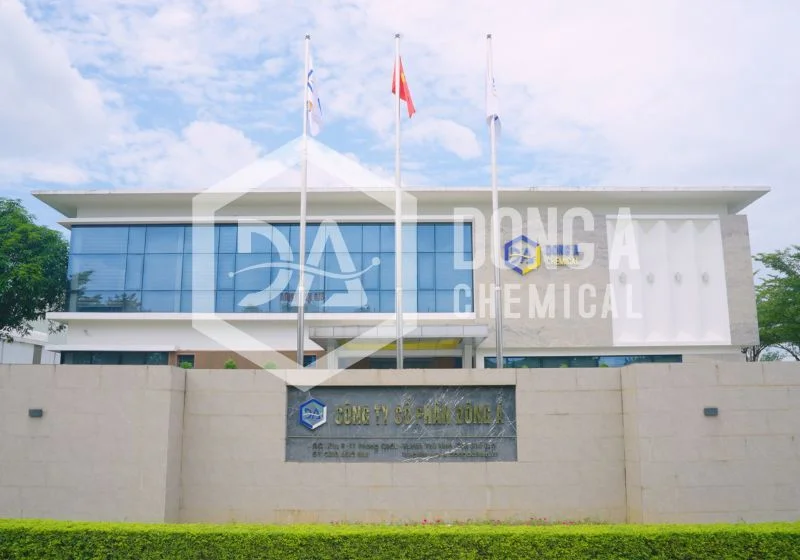
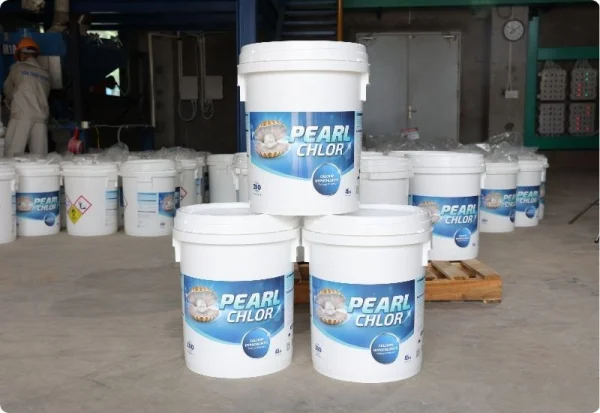
Dong A Chemical manufactures calcium hypochlorite for water treatment applications. Its Pearl Chlor 70% product specifies an available chlorine content of at least 70%.
Pearl Chlor 70% is calcium hypochlorite, chemically distinct from TCCA. Buyers should confirm the required product form, specification and application rather than treating the two products as interchangeable. dongachem.com
For product information or a quotation, contact Dong A Chemical with your intended application, required quantity, packaging requirements and destination port.
Contact Dong A Chemical
- International sales executive
- Dong A Joint Stock Company
- Quarter 9, Phu Ninh Commune, Phu Tho Province, Vietnam
- Email: kinhdoanh@dongachem.vn; export@dongachem.vn; hanh.nguyen@dongachem.vn
- Website: https://dongachem.vn/ or https://dongachem.com/
- Tel/WhatsApp/Viber/Zalo: +84 342 597 726
Related Articles
Dong A Chemical – Global Chlorine Supplier
Dong A Chemical - Manufacturer and Global Supplier of Chlorine. Owning a large-scale production ...
What is Chlorine? Properties and Applications of Chlorine Compound in Life
Chlorine is one of the simplest and most common compounds in chemistry. It was discovered in the ...
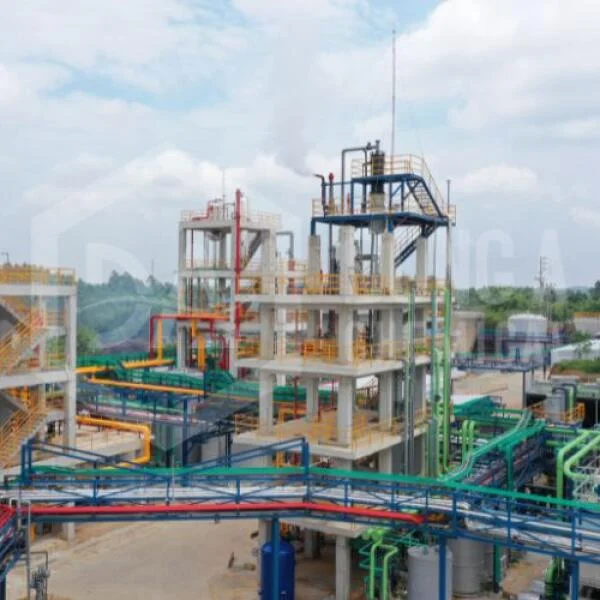
Dong A Chemical Joint Stock Company Builds Vietnam’s First Large-Scale Chlorine Plant
With the goal of supplying customers with a full range of chlor-alkali chemicals, including ...
TCCA 90 (Chlorine 90): The Solution for Water Safety
TCCA 90 not only eradicates pathogenic microorganisms but also prevents the growth of unwanted algae ...