

Top 7 Most Common Chemicals for Shrimp Pond Water Treatment
Hello, shrimp farmers!
Shrimp farming is often described as a business of taking risks with nature. However, by gaining better control over water quality, farmers can significantly improve their chances of success. Clean and stable water is the foundation of a healthy shrimp pond, helping shrimp grow well while reducing the risk of disease.
Effective pond water management therefore plays a critical role in modern shrimp farming, and the proper use of water treatment chemicals is often an essential part of the process.
However, choosing the right product, determining the correct dosage, and knowing when to apply it are not always straightforward.
From the perspective of someone who has worked closely with shrimp farmers and water treatment solutions for many years, this article provides a comprehensive overview of the most commonly used chemicals, explaining how they work, their advantages and limitations, and how they should be applied properly.
1. Calcium Hypochlorite (Chlorine)
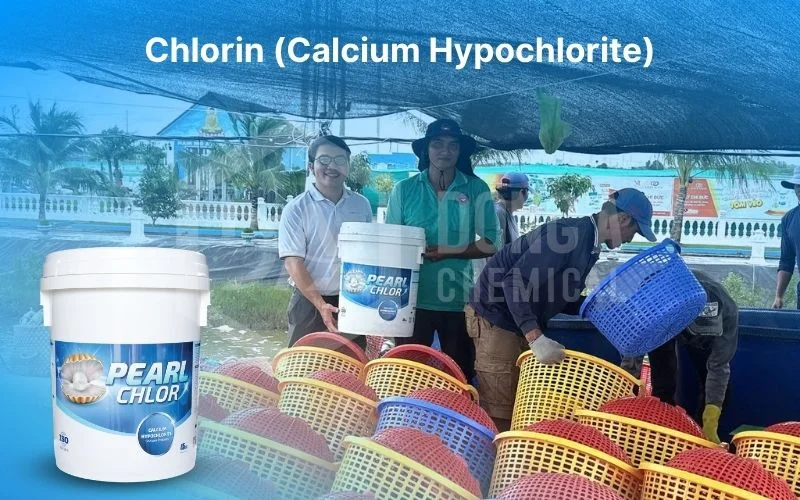
Chlorine, most commonly used in the form of Calcium Hypochlorite [Ca(OCl)₂] with an available chlorine content of 65–70%, is one of the most widely used disinfectants during shrimp pond preparation.
When Calcium Hypochlorite dissolves in water, it produces hypochlorous acid (HOCl) and hypochlorite ions (OCl⁻):
Ca(OCl)₂ + H₂O → HOCl + OCl⁻
Among these species, HOCl is the more powerful disinfecting agent. It can penetrate microbial cell membranes, oxidize cellular components, and damage essential proteins and enzymes, thereby inactivating bacteria, viruses, fungi, and other pathogens.
Advantages
- Highly effective against bacteria, viruses, fungi, protozoa, and unwanted aquatic organisms.
- Provides broad-spectrum disinfection.
- Relatively cost-effective and widely available.
- Also helps oxidize organic matter and other reducing substances in water.
Disadvantages
- Non-selective: it can also eliminate beneficial bacteria and microorganisms.
- May disrupt the pond's microbial balance.
- If residual chlorine remains in the water before stocking, it can stress or harm shrimp.
- Its effectiveness is strongly influenced by water pH and organic load.
How to Use Chlorine Effectively
For disinfecting water in a reservoir or pond before stocking:
A commonly used dosage is 20–30 ppm, equivalent to approximately 20–30 kg per 1,000 m³ of water, depending on the actual available chlorine concentration and water quality.
Dissolve the Calcium Hypochlorite thoroughly in water and distribute it evenly throughout the pond. Run aerators and paddle wheels to ensure uniform distribution and support the dissipation of residual chlorine.
Important: Chlorine is generally more effective at lower pH because a greater proportion of chlorine remains in the form of HOCl. As pH increases, the proportion of OCl⁻ increases and disinfecting efficiency decreases.
For pond preparation, chlorine is typically applied 3–5 days before stocking, with the actual stocking time determined by testing for residual chlorine.
Never apply high doses directly to a pond containing shrimp. Excessive chlorine can damage shrimp gills and cause severe mortality. When chlorine must be used in an active shrimp pond, the dosage and application method should be determined by a qualified aquaculture technician based on actual water conditions.
2. Potassium Permanganate (KMnO₄)
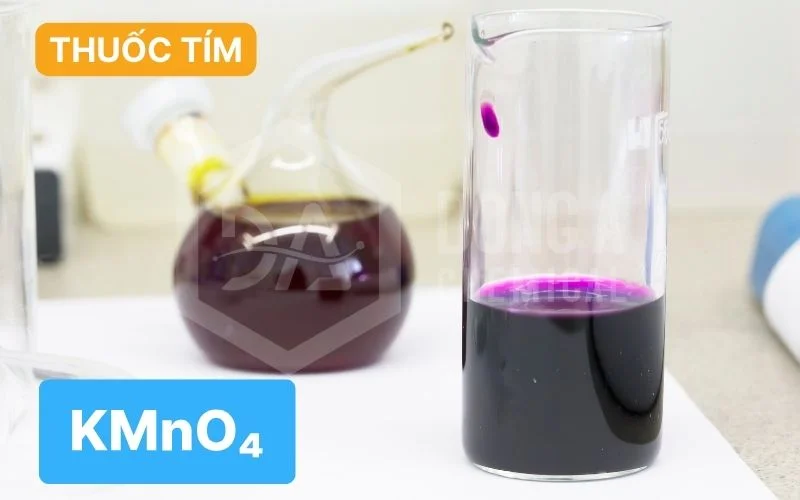
Potassium Permanganate (KMnO₄), commonly known as Potassium Permanganate or KMnO₄, is a strong oxidizing agent with its characteristic purple color. It is commonly used for water conditioning, oxidation of organic matter, and control of certain microorganisms.
Potassium Permanganate works primarily through oxidation. Once added to water, it oxidizes organic matter and certain dissolved substances such as iron and manganese. It can also damage microbial cell structures and contribute to the removal of suspended impurities.
Advantages
- Strong oxidizing capability.
- Helps reduce organic matter and microbial loads.
- Can help control excessive algae under appropriate conditions.
- Useful for improving water quality when organic loading is high.
- Can oxidize dissolved iron and manganese.
Disadvantages
- Its effectiveness decreases rapidly in water with a high organic load because the chemical is consumed quickly.
- Excessive dosage can stress shrimp and damage their gills.
- Treatment may result in the formation of brown or dark manganese dioxide (MnO₂).
- The treated water may require time for suspended oxidation products to settle.
How to Use Potassium Permanganate Effectively
For water with a high organic load, a commonly used range is approximately 2–5 kg per 1,000 m³, although the appropriate dosage should be adjusted according to water quality and the product's concentration.
Apply the product evenly throughout the pond and maintain aeration during treatment.
Practical Tip
The color of the water can provide a rough indication of the oxidizing demand.
If the purple color disappears very quickly after application, this may indicate a high organic load and rapid consumption of the chemical. However, color observation should not be used as the sole method for determining dosage. Overdosing can be harmful to shrimp.
Potassium Permanganate is commonly used during pond preparation or, under professional supervision, as part of emergency water-quality management when organic pollution is high.
3. Benzalkonium Chloride (BKC)
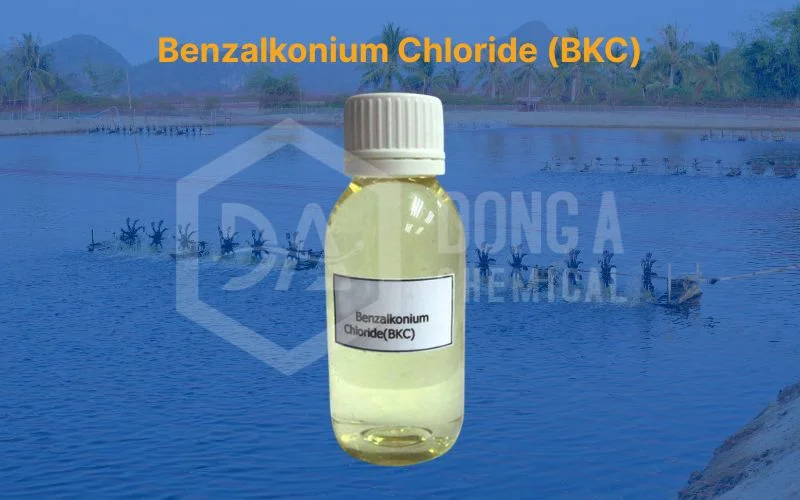
Benzalkonium Chloride (BKC) is a quaternary ammonium compound widely used as a disinfectant in aquaculture.
BKC is a cationic surfactant. It interacts with microbial cell membranes, disrupting membrane integrity and permeability. This causes leakage of intracellular components and ultimately leads to microbial cell death.
Advantages
- Effective against a broad range of bacteria and fungi.
- Can also act against certain protozoa.
- Easy to apply and commonly available in liquid formulations.
- Useful for microbial and algae management when applied at appropriate concentrations.
Disadvantages
- Non-selective and may also affect beneficial microorganisms.
- Excessive use can cause rapid algae reduction, potentially leading to oxygen depletion as the dead algae decompose.
- Repeated or inappropriate use may disrupt the biological balance of the pond.
- The appropriate withdrawal period and regulatory requirements should be considered when used in production ponds.
How to Use BKC Effectively
Typical application ranges may include:
- Reservoir or pond preparation: approximately 1–2 L per 1,000 m³.
- Active pond treatment: approximately 0.3–0.5 L per 1,000 m³, depending on the product concentration and treatment objective.
Always check the manufacturer's recommended dosage because commercial BKC products may have different active ingredient concentrations.
Dilute the product with water and distribute it evenly throughout the pond, paying particular attention to areas where organic matter accumulates.
BKC is generally used during pond preparation or during the culture period when microbial loads or excessive algae need to be controlled. Treatment should be based on actual pond conditions rather than routine overuse.
4. EDTA (Ethylenediaminetetraacetic Acid)
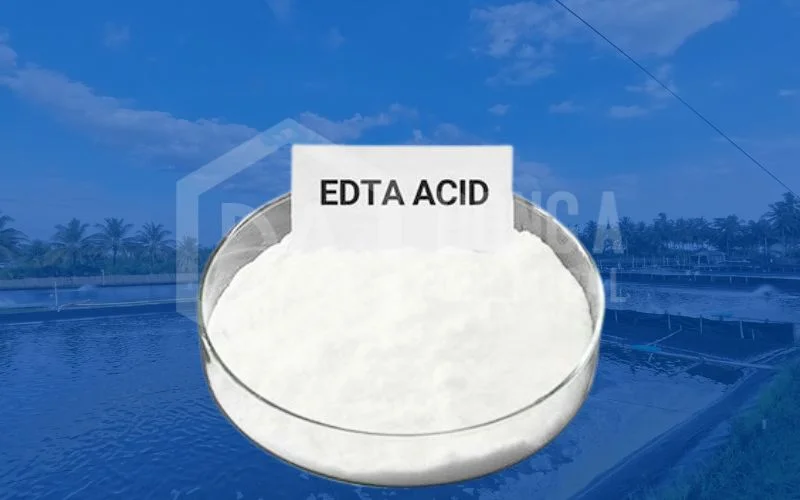
Many shrimp farmers refer to EDTA as a chemical that helps "detoxify" or "soften" water.
Unlike disinfectants such as chlorine or BKC, EDTA is not primarily a disinfectant. It is a chelating agent that binds metal ions.
EDTA can form stable complexes with various metal ions, particularly divalent and trivalent ions such as iron (Fe), copper (Cu), lead (Pb), and other heavy metals. By binding these ions, EDTA can reduce their free-ion activity and therefore help reduce their potential toxicity.
Advantages
- Effective for binding certain heavy metal ions.
- Can help reduce the toxicity of metal-contaminated water.
- Useful for managing water affected by iron, copper, and other metal ions.
- Can be particularly useful after heavy rainfall when acidic runoff may carry metals from pond banks into the water.
Disadvantages
- Relatively expensive compared with conventional pond-conditioning materials.
- Excessive use may bind essential minerals as well as undesirable metals.
- Overuse can interfere with the availability of calcium, magnesium, and other minerals required for shrimp growth and molting.
How to Use EDTA Effectively
Typical application ranges may include:
- Routine water conditioning: approximately 1–2 kg per 1,000 m³.
- Water affected by heavy metals or acidic runoff: approximately 3–5 kg per 1,000 m³, depending on the severity of contamination and product concentration.
Dissolve EDTA thoroughly in water and distribute it evenly throughout the pond.
It can be applied 2–3 days before stocking when heavy-metal contamination is suspected, or during the culture period when water quality is affected by metal contamination or after heavy rainfall.
5. Lime
Lime is one of the most widely used and affordable materials in shrimp farming.
The three main types commonly used in pond management are:
- Agricultural lime – Calcium Carbonate (CaCO₃)
- Hydrated lime – Calcium Hydroxide [Ca(OH)₂]
- Quicklime – Calcium Oxide (CaO)
Depending on the type of lime, it can increase alkalinity, adjust pH, supply calcium, and improve water and sediment conditions.
Advantages
- Low cost and widely available.
- Easy to use.
- Helps stabilize pH and alkalinity.
- Supplies calcium, which is important for shrimp exoskeleton formation.
- Quicklime can be highly effective for pond-bottom disinfection and elimination of unwanted organisms during pond preparation.
Disadvantages
- Large quantities may be required.
- Quicklime (CaO) and hydrated lime [Ca(OH)₂] can cause a rapid increase in pH if over-applied.
- Improper application can cause severe pH fluctuations and stress or kill shrimp.
How to Use Lime Effectively
For dry pond-bottom preparation:
Quicklime (CaO) may be applied at approximately 30–40 kg per 100 m², depending on soil conditions and the purpose of treatment.
For maintaining alkalinity and pH in ponds containing shrimp:
Agricultural lime (CaCO₃) or dolomite may be applied at approximately 10–20 kg per 1,000 m³, depending on actual alkalinity and pH.
Expert Tip
When applying lime to a pond containing shrimp, dissolve the appropriate amount in water and allow coarse particles to settle. The clearer suspension can then be distributed more evenly, helping reduce unnecessary turbidity.
When to Apply Lime
- Quicklime (CaO): primarily during dry pond preparation.
- Agricultural lime (CaCO₃): commonly applied to help maintain alkalinity and stabilize pH.
- Lime may also be applied after heavy rainfall to help counteract changes in pond pH and alkalinity.
6. PAC (Poly Aluminium Chloride)
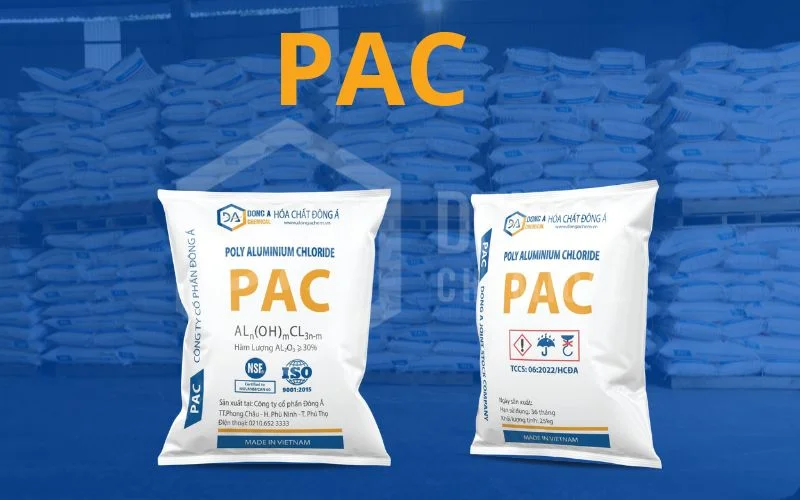
Poly Aluminium Chloride (PAC) is an inorganic coagulant widely used for water clarification.
PAC contains highly charged aluminum-based species that neutralize the electrical charges of suspended colloidal particles such as clay, silt, organic matter, and algae residues.
The process can be simplified as:
Negatively charged suspended particles + positively charged PAC species → Larger flocs → Settling
Once the particles aggregate into larger and heavier flocs, they settle to the bottom of the pond or reservoir.
Advantages
- Rapid coagulation and sedimentation.
- Highly effective at removing suspended solids and turbidity.
- Generally requires a lower dosage than conventional alum for many water-treatment applications.
- Can be used to improve water clarity in settling ponds and reservoirs.
Disadvantages
- PAC removes suspended particles from the water primarily by transferring them into settled sludge; it does not destroy the organic matter.
- If settled sludge is not removed, it can accumulate and decompose at the pond bottom.
- Improper dosage can affect water chemistry and may reduce treatment efficiency.
How to Use PAC Effectively
A commonly used dosage range is approximately 1–3 kg per 1,000 m³, depending on turbidity, suspended solids, PAC basicity, and product concentration.
Prepare a 5–10% PAC solution, then distribute it evenly throughout the treatment area.
Allow sufficient mixing to disperse the coagulant, then reduce or stop aeration where appropriate to allow flocs to settle.
After sedimentation, the accumulated sludge should be removed through siphoning or an appropriate sludge-removal system.
PAC is particularly useful in settling ponds for preparing clean water before transferring it to the culture pond. It may also be used to reduce turbidity caused by suspended sediments after heavy rainfall, provided that the pond has an effective sludge-removal system.
7. Iodine
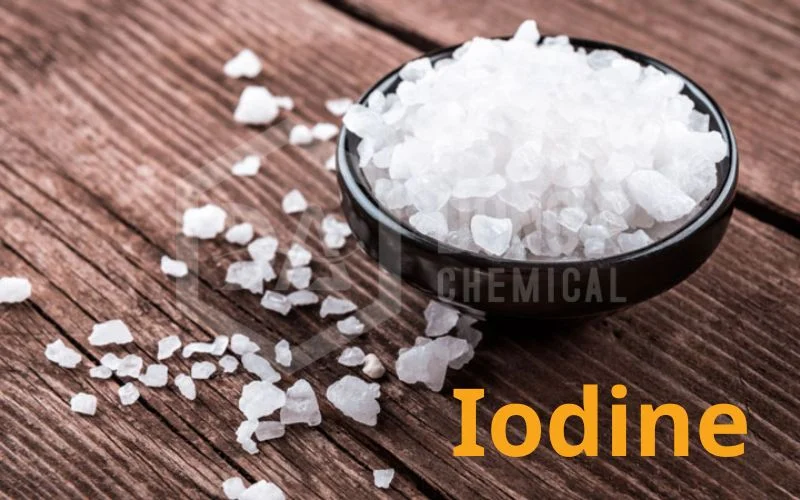
Iodine-based disinfectants are widely used in aquaculture as relatively mild disinfectants when applied according to the manufacturer's instructions.
Free iodine penetrates microbial cells and oxidizes essential cellular components, including proteins and nucleic-acid structures, thereby inactivating microorganisms.
Advantages
- Broad antimicrobial activity.
- Can be effective against many bacteria, fungi, and viruses.
- Generally considered less aggressive to pond water chemistry than strong oxidizing disinfectants when properly dosed.
- Can be useful for microbial management during shrimp production.
Disadvantages
- Usually more expensive than chlorine-based disinfectants.
- Iodine can be rapidly consumed or degraded under strong sunlight and high temperatures.
- Product formulations vary considerably, so the active iodine concentration must be considered when calculating dosage.
How to Use Iodine Effectively
Typical application ranges may include:
- Preventive treatment: approximately 0.3–0.5 L per 1,000 m³, depending on the product concentration.
- Treatment during microbial problems: approximately 0.5–0.8 L per 1,000 m³, subject to the manufacturer's instructions and actual pond conditions.
Dilute the product with water and distribute it evenly around the pond.
Iodine-based products are generally better applied during the late afternoon or evening, when exposure to strong sunlight is lower and the active ingredient can remain effective for longer.
Frequently Asked Questions About Shrimp Pond Water Treatment Chemicals
1. Can I mix Chlorine and Potassium Permanganate together to achieve a stronger treatment effect?
Absolutely not.
Chlorine-based disinfectants and Potassium Permanganate are both strong oxidizing agents. Combining different oxidizing chemicals can lead to unwanted chemical reactions, rapid consumption of the active ingredients, heat generation, and potentially hazardous conditions.
They should not be mixed or applied simultaneously.
If both treatments are required, they should be used separately with sufficient time between applications and only according to a qualified aquaculture professional's treatment plan.
2. How long should I wait before adding probiotics after treating the pond with BKC or Chlorine?
After applying Chlorine, farmers should generally wait until residual chlorine has completely dissipated before adding beneficial bacteria. Depending on dosage, sunlight, organic load, and water conditions, this may take several days.
A commonly used practical interval is 3–5 days, but the most reliable approach is to test residual chlorine before introducing probiotics.
For BKC, a waiting period of approximately 48 hours is often recommended, depending on the dosage and product formulation.
Adding probiotics too soon may kill or inhibit beneficial microorganisms, resulting in wasted product and poor biological recovery.
3. Why does my pond remain cloudy after applying PAC, and why does the pond bottom become slimy?
This can happen when PAC is overdosed or when the coagulated material is allowed to accumulate at the pond bottom without proper removal.
PAC causes suspended particles and organic matter to form flocs and settle. However, these materials are not destroyed. If they remain at the bottom, they can combine with shrimp feces, uneaten feed, and other organic waste.
Over time, this can contribute to sludge accumulation, anaerobic decomposition, and the formation of harmful gases.
Therefore, when PAC is used, an effective sludge removal or siphoning system is essential.
Reliable Water Treatment Chemicals for Shrimp Farming
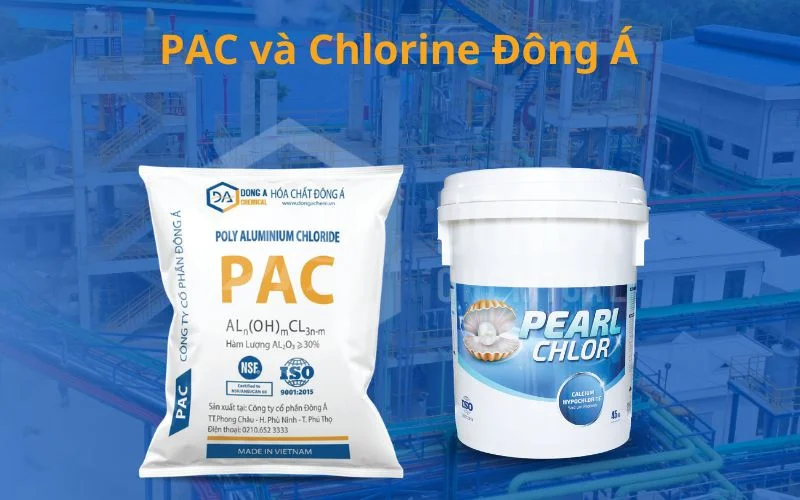
Effective water treatment depends not only on proper technical procedures but also on the quality and consistency of the chemicals being used.
Using counterfeit, substandard, or incorrectly formulated products can result in inadequate disinfection, unstable water quality, unnecessary costs, and potential risks to shrimp health.
Established in 2003, Dong A Chemical has more than two decades of experience in the manufacture and supply of industrial chemicals.
Dong A Chemical provides key chemical solutions for aquaculture, including:
Dong A PAC
High-performance coagulation for efficient removal of suspended solids and turbidity, helping improve the efficiency of settling ponds and water clarification systems.
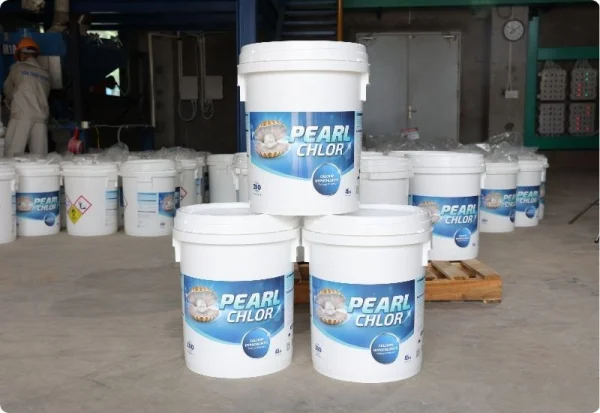
Calcium Hypochlorite (Chlorine)
Consistent available chlorine content and strong oxidizing performance, making it suitable for pond preparation and water disinfection when applied correctly.
Our products are manufactured under controlled quality-management processes and are supplied with appropriate technical specifications and quality documentation for professional use.
Featured by VTV Can Tho
Dong A Chemical's products have also been featured in a report by VTV Can Tho, a regional station of Vietnam Television (VTV), highlighting the company's chemical products and solutions for aquaculture water treatment.
This media coverage further reflects Dong A Chemical's commitment to product quality and its long-term partnership with the aquaculture industry.
Conclusion
The saying "Shrimp farming is water farming" has never been more relevant.
Understanding the properties, mechanisms, advantages, limitations, and proper application of water treatment chemicals is essential for maintaining a stable pond environment.
When chemicals are used at the right time, at the right dosage, and for the right purpose, farmers can better control water quality, reduce disease risks, minimize unnecessary treatment costs, and create more favorable conditions for shrimp growth.
If you are experiencing difficulties with shrimp pond water quality or need advice on suitable water treatment chemicals, feel free to contact Dong A Chemical.
Our technical team is ready to support shrimp farmers and aquaculture businesses with professional chemical solutions for water treatment and pond management.
Wishing you a healthy crop, strong shrimp growth, and a successful harvest!
Dong A Chemical – Seeking Distributors for Calcium Hypochlorite in Southeast Asia
Dong A Chemical is currently seeking qualified distributors and business partners for Calcium Hypochlorite in Southeast Asian markets.
Attractive Distribution Policy
- Competitive pricing.
- Special pricing for large-volume orders.
- Preferential terms for long-term cooperation.
- Professional technical and sales support.
- Stable supply from an experienced chemical manufacturer.
Contact Us
Nguyen Bich Hanh – Hanah (Ms.)- International Sales Executive
Email: export@dongachem.vn; hanh.nguyen@dongachem.vn
Tel / WhatsApp / Viber / Zalo: +84 342 597 726
Dong A Chemical – Reliable Chemical Solutions for Water Treatment and Aquaculture.
Related Articles
How Many Chlorine Tablets for Your Pool? A Step-by-Step Guide to Proper Dosage and Maintenance
One of the most crucial components in keeping your pool water crystal clear and free from harmful ...
Dong A Chemical – Global Chlorine Supplier
Dong A Chemical - Manufacturer and Global Supplier of Chlorine. Owning a large-scale production ...
Compared Calcium Hypochlorite to Other Chlorine-based Disinfectants
Calcium hypochlorite is one of the most commonly used chlorine-based disinfectants. Chlorine-based ...
What is Chlorine? Properties and Applications of Chlorine Compound in Life
Chlorine is one of the simplest and most common compounds in chemistry. It was discovered in the ...
Dong A Chemical Joint Stock Company Builds Vietnam’s First Large-Scale Chlorine Plant
With the goal of supplying customers with a full range of chlor-alkali chemicals, including ...