

Integrated Disease Prevention in Shrimp Farming: Effective Water Treatment and Pond Management Protocols
In intensive and super-intensive shrimp farming, disease outbreaks rarely result from a single cause. Pathogens may already be present in source water, post-larvae, pond-bottom sludge, or intermediate hosts. When water quality deteriorates, shrimp become stressed, their immune defenses weaken, and pathogens have an opportunity to proliferate. Therefore, integrated disease prevention in shrimp farming must be implemented systematically, from source-water selection, sedimentation, filtration, and disinfection to continuous environmental management throughout the production cycle.
Effective water treatment does not mean that using more chemicals will produce better results. The primary objective is to create a stable environment, prevent pathogen introduction, control organic matter and toxic compounds, and maintain a beneficial microbial community. When these factors are properly managed, shrimp experience less stress, feed more actively, grow more uniformly, and face a substantially lower risk of WSSV, AHPND, TPD, EHP, white feces syndrome, and other opportunistic diseases.
Why Is Water Management Critical to Shrimp Disease Prevention?
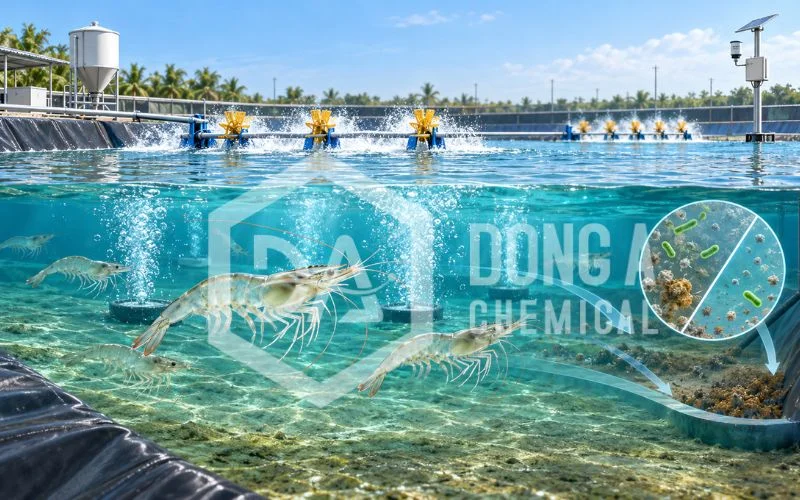
Shrimp live, breathe, feed, and excrete directly into the surrounding water. Any environmental fluctuation can therefore have an immediate effect on their health. Water is not only the shrimp’s living environment but also a pathway for pathogen transmission and a medium in which uneaten feed, feces, dead algae, and organic decomposition products accumulate.
Water management is therefore not limited to keeping individual parameters within acceptable ranges. It is also a proactive measure to interrupt disease-transmission pathways and reduce pathogen pressure in the pond.
Water can rapidly transmit pathogens
Viruses, bacteria, microsporidia, and various intermediate hosts may enter culture ponds through the incoming water supply. If water is pumped directly from rivers, canals, or shared farming areas without passing through a reservoir, filtration system, and disinfection process, the risk of introducing pathogens into the pond is high.
Pathogens may also spread between ponds through:
- Inlet and discharge water systems that are not properly separated.
- Leakage between ponds or overflow following heavy rainfall.
- Shared equipment such as pumps, feeding trays, cast nets, and seine nets.
- Birds, crabs, mud crabs, wild fish, and other intermediate hosts.
- Workers moving from infected ponds to healthy ponds.
- Infected post-larvae that have not yet shown clinical signs.
In high-density culture systems, even a small volume of pathogen-contaminated water can create significant disease pressure if pond conditions favor pathogen proliferation. A key principle of integrated disease prevention in shrimp farming is therefore to control the water before it enters the culture pond, rather than waiting until it has already been introduced.
Poor water quality causes stress and weakens disease resistance
Shrimp can adapt to a certain range of environmental conditions but are highly sensitive to sudden changes. After heavy rainfall, pH, salinity, temperature, and alkalinity may all decline simultaneously. When an algal bloom crashes or organic matter accumulates, dissolved oxygen decreases while ammonia (NH₃), nitrite (NO₂⁻), and hydrogen sulfide (H₂S) increase.
These fluctuations force shrimp to expend more energy on osmoregulation, respiration, and maintaining physiological balance. Shrimp may reduce feed intake, develop soft shells, molt poorly, surface for oxygen, or congregate around paddlewheel aerators. If these conditions persist, protective barriers in the gills, exoskeleton, and digestive tract may become compromised, allowing Vibrio and other opportunistic pathogens to invade.
Even when an individual parameter has not exceeded a critical threshold, a rapid fluctuation may still cause significant stress. Environmental stability is therefore often just as important as the value recorded at any one point in time.
Diseases commonly associated with environmental stress and waterborne pathogen pressure
Disease/syndrome | Pathogen or group of causes | Relationship with the aquatic environment |
WSSV | White spot syndrome virus | The risk of an outbreak increases when shrimp are stressed, temperatures change rapidly, environmental conditions fluctuate, or pathogen-contaminated water enters the pond. |
AHPND | Certain strains of Vibrio parahaemolyticus and other Vibrio carrying virulence genes | More likely to proliferate when the pond bottom is rich in organic matter, Vibrio levels are high, algal conditions fluctuate, and shrimp gut health is compromised. |
TPD | Associated with certain virulent strains of Vibrio | May spread through post-larvae, water, and equipment; it can cause severe losses during the early stages of culture. |
EHP | The microsporidian Enterocytozoon hepatopenaei | Spores may persist in pond-bottom sludge, waste, and carrier organisms, causing slow growth and size variation. |
WFS | White feces syndrome | Has a complex association with gut health, EHP, Vibrio, feed, algae, and environmental conditions. |
Gill fouling and shell fouling | Bacteria, protozoa, and suspended organic matter | Commonly occur when the water is polluted, the pond bottom is contaminated, microbial loads are high, and shrimp molt poorly. |
Toxicity caused by harmful metabolites | NH₃, NO₂⁻, H₂S, and other decomposition products | Damages the gills, reduces oxygen transport, weakens shrimp, and increases susceptibility to opportunistic pathogens. |
Good water management cannot completely eliminate every disease risk, but it can simultaneously reduce pathogen loads, stress levels, and the potential for disease transmission within the pond.
Source-Water Treatment Protocol Before Stocking
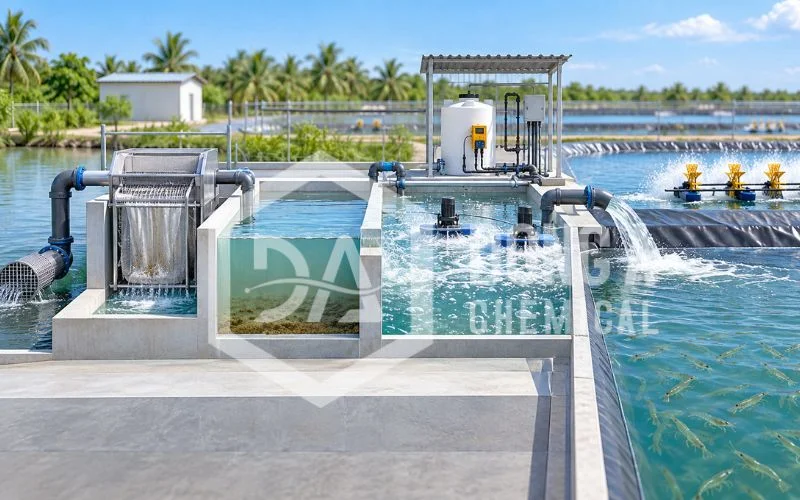
An effective water-treatment protocol requires a separate reservoir or settling pond. Water should not be pumped directly from the external environment into an active culture pond, particularly in areas with a high concentration of farms or a history of disease outbreaks.
Step 1: Select the water source and conduct an initial assessment
Before pumping water, farmers should observe its color, odor, clarity, and the surrounding conditions at the intake point. Water should not be taken when the source is receiving discharge from infected ponds, when tides are carrying heavy sediment loads, or after heavy rainfall has caused major fluctuations in water quality.
Initial parameters to be tested include:
- pH, temperature, and salinity.
- Alkalinity and hardness.
- Dissolved oxygen.
- NH₃/NH₄⁺, NO₂⁻, and H₂S if there are signs of pollution.
- Turbidity, total suspended solids, and organic matter.
- Iron, manganese, or heavy metals in areas affected by acid sulfate soils, groundwater use, or industrial pollution.
- Vibrio counts and specific pathogens when appropriate laboratory testing is available.
The test results help determine the most suitable treatment method. For example, highly turbid water requires a longer settling period; acidic water must be treated to remove iron and stabilize pH before disinfection; and water with a high organic load may reduce the effectiveness of chlorine-based disinfectants.
Step 2: Settle and filter water in the reservoir
Water should be pumped through multilayer filter bags with an appropriate mesh size to remove wild fish, eggs, crustacean larvae, small jellyfish, and intermediate hosts. Filter bags must be inspected regularly, as tears or improper installation can significantly reduce their effectiveness.
After filtration, the water should be retained in a settling pond or reservoir to:
- Reduce sediment and suspended solids.
- Remove some organisms and pathogens associated with suspended particles.
- Improve the effectiveness of the subsequent disinfection process.
- Allow time to assess water quality before transferring the water to the culture pond.
- Maintain a readily available supply of treated water for replenishment when required.
The required settling time depends on turbidity, organic load, and system design. The reservoir should have sufficient capacity, stable embankments, and complete separation from drainage channels. Settled sludge must be properly managed to prevent it from being resuspended when water is pumped.
Step 3: Aerate and correct unfavorable water conditions
Aeration or paddlewheel operation in the reservoir helps increase dissolved oxygen, release certain undesirable gases, and promote the oxidation of iron and manganese. Once these metals precipitate, settling and sediment removal can be used before transferring the water to the next treatment stage.
If pH, alkalinity, or hardness is outside the appropriate range, it should be adjusted gradually. Sudden increases or decreases in pH should be avoided because they may alter the chemical form and toxicity of certain compounds. In particular, as pH rises, the proportion of highly toxic unionized ammonia (NH₃) also increases.
For water with a high organic load, priority should be given to improving sedimentation, filtration, and solids removal. Simply increasing the disinfectant dose to compensate for poor-quality water is not recommended. Organic matter both consumes the active disinfectant and makes disinfection less uniform.
Step 4: Disinfect the incoming water
After the water has been settled and pretreated, an appropriate disinfectant may be applied to reduce bacteria, viruses, protozoa, and other harmful organisms.
Commonly used active ingredients include chlorine, calcium hypochlorite, TCCA, chloramine B, BKC, iodine-based products, and other oxidizing agents. Each product differs in active ingredient concentration, mode of action, effective pH range, and safety requirements.
A single fixed dosage should not be applied to every pond. The actual dosage depends on:
- The product’s active ingredient concentration.
- The actual volume of water to be treated.
- pH, turbidity, and organic load.
- Treatment objectives and the risk level of the source water.
- The species and life stages of organisms to be controlled.
- Required contact time.
- Residual chlorine or other verification parameters after treatment.
After disinfection, aeration should be maintained, sufficient time should be allowed for the disinfectant to dissipate, and residual levels must be tested before the water is transferred to a pond containing shrimp or before stocking.
Selecting a disinfectant according to pH and source-water characteristics
The effectiveness of chlorine is strongly influenced by pH. In water, chlorine forms hypochlorous acid (HOCl) and hypochlorite ions (OCl⁻). HOCl has stronger disinfecting activity, but its proportion decreases as pH increases. Therefore, the same chlorine dose may be less effective in high-pH water than in neutral or mildly alkaline water.
However, farmers should not sharply reduce pH solely to increase chlorine activity. Product selection and dosage calculations should be based on actual water conditions, organic load, and the manufacturer’s instructions.
For turbid water or water with a high organic load, sedimentation, filtration, and organic-load reduction should be prioritized. For water with unusual salinity, alkalinity, or metal concentrations, small-scale testing should be conducted and treatment effectiveness verified before full-scale application.
Disinfectants should not be mixed unless their compatibility has been clearly established. In particular, chlorine or hypochlorite products must never be mixed with acids, ammonia, or products of unknown composition, as these combinations may release toxic gases and pose a serious risk to users.
Safety principles for water disinfection
Operators must read the product label, Safety Data Sheet, and technical instructions before use. Appropriate personal protective equipment should be worn, including gloves, safety goggles, suitable masks or respiratory protection, protective clothing, and boots.
Chemicals must be stored in a dry, well-ventilated area away from sunlight, heat, and combustible materials. Products must not be handled with bare hands. Users should not lean over open bags or use scoops and tools contaminated with other chemicals.
Dissolution and preparation must be carried out in a well-ventilated location and in the sequence specified by the manufacturer. Operators should not stand downwind of chemical vapors or dust. After treatment, records should include the product name, active ingredient concentration, amount used, volume of water treated, treatment time, and test results.
Daily and Weekly Water-Quality Management Schedule for Shrimp Ponds
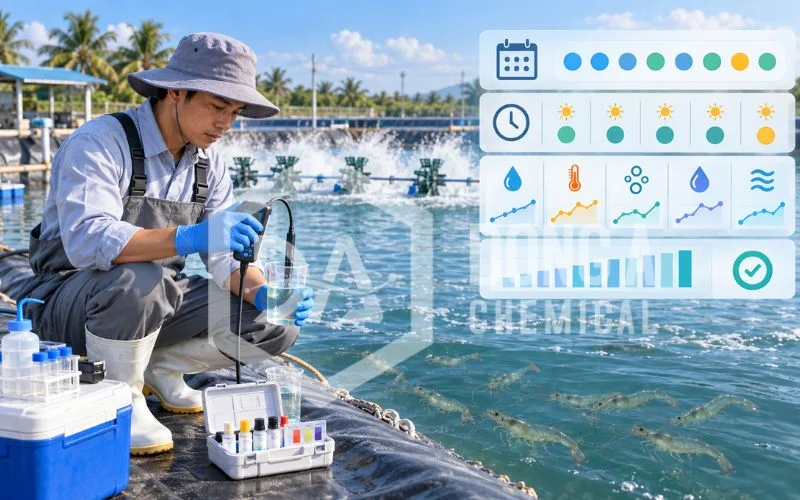
Effective water management must be based on continuous monitoring data. Measuring parameters without recording them makes it difficult to identify developing trends. Farmers should maintain a pond logbook, record results at consistent times each day, and assess them together with feed input, shrimp condition, weather, and any treatments applied.
Parameters to be checked daily
Parameters that can change rapidly should be monitored every day, including:
- Temperature: Measure in the early morning and afternoon to assess daily fluctuations.
- pH: Measure at consistent times each day. A pH range of approximately 7.5–8.5 is generally suitable for Pacific white shrimp. The day–night fluctuation should remain limited, preferably not exceeding approximately 0.5 pH units.
- Dissolved oxygen: This is particularly important between midnight and early morning. DO should preferably be maintained above 5 mg/L and should not be allowed to fall to levels that cause stress.
- Water transparency and color: Observe changes associated with algae, suspended solids, and organic matter.
- Salinity: Monitor closely after rainfall, water exchange, or during periods of hot weather.
- Shrimp behavior and condition: Inspect feeding trays, gut fullness, coloration, feces, hepatopancreas, gills, and the shrimp’s response to sound or disturbance.
- Paddlewheel and aeration system performance: Ensure adequate oxygenation and proper water circulation to concentrate waste in designated collection zones.
Results should be evaluated as trends rather than isolated measurements. For example, a gradual decline in morning pH over several days or an increasing difference between morning and afternoon pH may indicate that the algal community and alkalinity are becoming unstable.
Parameters to be checked periodically
Depending on stocking density, shrimp age, and risk level, these parameters may be tested two to three times per week or more frequently during unfavorable weather conditions.
Important parameters include:
- Alkalinity and hardness.
- NH₃/NH₄⁺, NO₂⁻, and H₂S.
- Total bacterial counts and Vibrio counts.
- Algal density and species composition.
- Total suspended solids and organic matter.
- Sludge depth, color, and odor.
- Hepatopancreatic and intestinal health and shrimp growth rate.
- PCR or other pathogen-screening results when shrimp show abnormal signs.
In high-density ponds, toxic compounds and suspended solids may increase rapidly as feed inputs rise. Monitoring frequency should therefore be adjusted according to biomass rather than remaining unchanged throughout the entire production cycle.
Warning signs requiring early intervention
The following environmental and shrimp-health warning signs should not be ignored:
- A sudden reduction in feed intake without an obvious cause.
- Shrimp surfacing, swimming near the pond edge, or congregating around aerators.
- Interrupted or empty digestive tracts, floating feces, or white fecal strings.
- Pale, shrunken, soft, or otherwise abnormal hepatopancreas.
- Dirty, blackened, yellowish, or heavily fouled gills.
- Rapid changes in water color, excessively dark water, surface scum, or persistent foam.
- Low morning pH combined with high afternoon pH or a continuous decline in alkalinity.
- Foul-smelling pond bottoms, a rotten-egg odor, or the appearance of black anaerobic zones.
- Increasing NH₃ and NO₂⁻ levels combined with low dissolved oxygen.
- Uneven shrimp size, slow growth, or a rising feed conversion ratio.
When abnormalities occur, chemicals should not be applied immediately based solely on past experience. Dissolved oxygen, pH, temperature, alkalinity, toxic compounds, feeding trays, and shrimp health should be checked first. If an infectious disease is suspected, samples should be collected for laboratory testing before implementing measures that could alter the test results.
Common Mistakes That Reduce the Effectiveness of Shrimp Disease Prevention
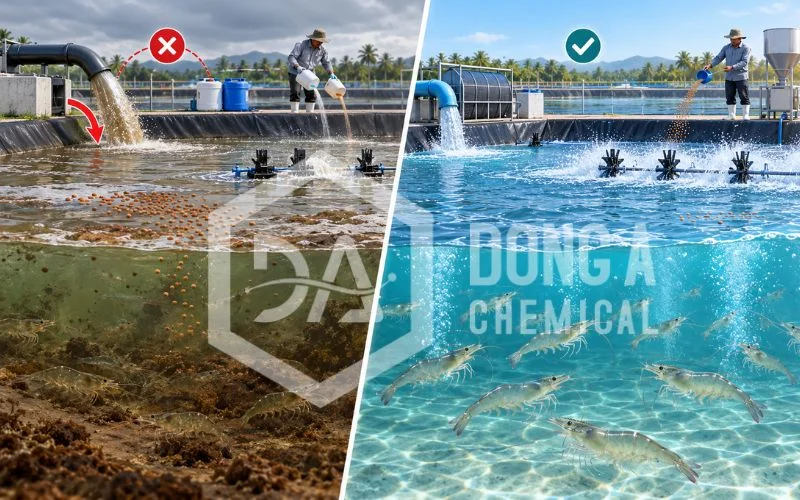
One of the most common mistakes is focusing on killing pathogens while overlooking the conditions that allow them to proliferate. A single disinfection event cannot keep a pond clean if uneaten feed, shrimp feces, and dead algae continue to accumulate.
Common mistakes to avoid include:
- Pumping water directly into the culture pond: Water that has not been settled, filtered, and disinfected may carry pathogens and intermediate hosts.
- Incorrectly estimating pond volume: Calculating dosage based only on surface area without accounting for average water depth can result in a significantly incorrect treatment concentration.
- Increasing the dose when the water is heavily polluted: Organic matter consumes active ingredients. The appropriate solution is to reduce the organic load before disinfection.
- Applying disinfectants and probiotics too close together: Residual disinfectants may kill or inhibit the beneficial microorganisms that have just been introduced.
- Routine whole-pond disinfection while shrimp are present: This practice may disrupt the microbial community, stress the shrimp, and create an ecological void in which opportunistic bacteria can rapidly re-establish themselves.
- Testing water only after shrimp show signs of distress: By the time shrimp reduce feed intake or surface for oxygen, environmental conditions may already have been deteriorating for several days.
- Using multiple products at the same time: Mixing products without understanding their interactions may reduce treatment effectiveness, cause chemical reactions, or make it impossible to identify which treatment produced the observed result.
- Failing to test residual chlorine: Clear-looking water is not necessarily safe. Residual oxidant levels must decline to a safe level before the water is transferred into a shrimp pond.
- Overusing molasses: Adding an inappropriate amount of supplemental carbon can cause rapid growth of heterotrophic bacteria, increase oxygen demand, and produce excessive sludge.
- Failing to screen post-larvae: Even when pond water is properly treated, post-larvae carrying WSSV, EHP, or AHPND-associated pathogens can cause the entire crop to fail.
Effective disease prevention requires a combination of pathogen-free post-larvae, safe source water, appropriate nutrition, a clean pond bottom, strong biosecurity, and early intervention based on monitoring data.
Frequently Asked Questions About Water Treatment and Shrimp Disease Prevention
1. How long after applying chlorine can shrimp be stocked?
The decision should not be based solely on the number of days elapsed. The dissipation rate of chlorine depends on the applied dose, sunlight, aeration, pH, temperature, and organic load in the water.
Under typical conditions, farmers often wait approximately three to seven days while operating paddlewheels or aeration systems. However, shrimp should be stocked only after testing confirms that residual chlorine has fallen to a safe level and that pH, alkalinity, dissolved oxygen, and salinity have stabilized. A chlorine test kit should be used for verification rather than relying only on the water’s color or odor.
2. Can chlorine and probiotics be applied on the same day?
This is generally not recommended. Chlorine is a disinfectant and may kill or inhibit beneficial microorganisms. If probiotics are added before the chlorine has fully dissipated, their effectiveness in stabilizing water color, decomposing organic matter, or controlling toxic compounds may be significantly reduced.
Probiotics should be added only after residual chlorine has been confirmed to be within a safe range. The required interval depends on the product, dosage, and pond conditions. Farmers should test residual levels and follow the manufacturer’s instructions.
3. Should an active culture pond be disinfected routinely?
Whole-pond disinfection should not be treated as a compulsory routine measure. In ponds containing shrimp, disinfectants may affect the gills, microbial community, algae, and overall water quality. After bacterial numbers decline, the remaining organic matter may allow Vibrio or other opportunistic organisms to recover rapidly.
Priority should instead be given to feed management, waste collection and removal, adequate aeration, alkalinity maintenance, appropriate probiotic application, and source-water control. Chemicals should be used only after the specific problem has been identified, shrimp health has been assessed, and suitable technical guidance is available.
4. What pH range is suitable for shrimp ponds?
For Pacific white shrimp, a pH range of approximately 7.5–8.5 is generally considered suitable. However, stability is more important than forcing the water to reach a specific value. The difference between morning and afternoon pH should remain limited, preferably not exceeding approximately 0.5 pH units.
If pH fluctuates widely, farmers should examine algal density, alkalinity, organic load, and gas-exchange capacity. Chemicals should not be used to change pH too rapidly, as this may cause additional stress to the shrimp.
5. How can Vibrio be controlled without excessive chemical use?
Controlling Vibrio requires reducing the conditions that provide it with nutrients rather than attempting to kill it continuously. Farmers should carefully manage feed inputs, siphon or collect waste, maintain high dissolved oxygen levels, minimize pond-bottom sludge, and control algal crashes.
Incoming water must be treated in a separate reservoir. Quality-assured beneficial microorganisms may be used to compete for nutrients and support organic matter decomposition. At the same time, Vibrio counts, gut health, and hepatopancreatic condition should be monitored to detect increasing risks at an early stage.
6. When NH₃, NO₂⁻, and H₂S all increase, which problem should be addressed first?
The immediate priorities are to increase aeration and reduce or temporarily suspend feeding, because oxygen deficiency intensifies the harmful effects of all three toxic compounds. Farmers should immediately check pH, shrimp distribution, pond-bottom odor, and signs of gill damage.
H₂S is highly toxic even at low concentrations, particularly in oxygen-deficient bottom zones and under low-pH conditions. Priority should therefore be given to restoring bottom-water oxygen, eliminating anaerobic zones, and removing accumulated waste without aggressively disturbing black sludge throughout the water column.
NH₃ must be evaluated in relation to pH and temperature because the proportion of toxic unionized ammonia increases as pH and temperature rise. NO₂⁻ should be assessed together with salinity, chloride concentration, and the condition of the shrimp’s gills.
After the immediate emergency has been controlled, the underlying causes must be addressed. These may include overfeeding, excessive biomass, microbial imbalance, an algal crash, and inadequate waste collection. Multiple chemicals should not be applied simultaneously before the severity of each parameter has been properly assessed.
7. How should a pond previously infected with EHP be prepared for the next crop?
A pond with a history of EHP requires strict biosecurity-based cleaning and preparation. After harvest or crop termination, dead shrimp and waste must be removed, and discharge water must be treated in accordance with applicable regulations. Sludge should be removed from accumulation zones, and all equipment must be thoroughly cleaned.
The pond and culture system should be completely dried whenever conditions allow. Equipment, pipelines, reservoirs, nursery areas, and transport vehicles must be cleaned and disinfected separately to avoid carrying spores into the next production cycle. Equipment should not be shared between untreated areas and areas that have already been cleaned.
For the next crop, farmers should select post-larvae with negative test results for EHP and other important pathogens. Live or raw feed, crabs, mud crabs, wild crustaceans, and other potential intermediate hosts must be strictly controlled. Before stocking, samples of sludge, water, or organisms from the culture system may be tested to reassess the level of risk.
Disinfection procedures should follow the recommendations of competent aquaculture authorities and be adapted to the farm’s specific conditions because EHP spores may persist in organic matter and in areas that are difficult to clean.
Conclusion
Integrated disease prevention in shrimp farming does not depend on a single chemical or one disinfection event. It is a continuous series of measures that begins with post-larvae selection and source-water treatment and continues through the control of intermediate hosts, feed, algae, microbial communities, and pond-bottom sludge.
Properly settled, filtered, and disinfected source water can reduce the risk of introducing pathogens into the culture pond. Throughout the production cycle, maintaining stable dissolved oxygen, pH, alkalinity, and pond-bottom conditions helps minimize stress, strengthen disease resistance, and restrict the proliferation of Vibrio and other opportunistic pathogens.
Farmers should manage pond conditions using monitoring data, address underlying causes, and avoid indiscriminate chemical combinations. When abnormalities are detected, early and appropriate intervention is always less costly than waiting for a full-scale disease outbreak.
For advice on selecting water-treatment chemicals or calculating the appropriate dosage based on pond volume, please contact Dong A Chemical’s technical team for recommendations tailored to the specific conditions of your farm.
Related Articles
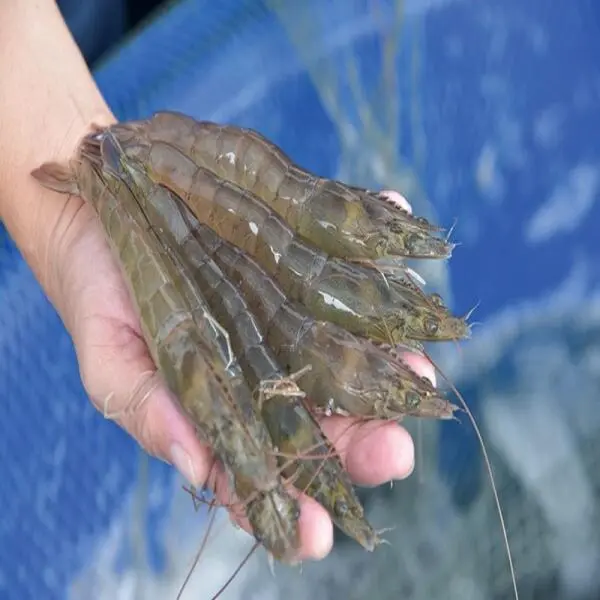
Top 6 Shrimp Diseases in Aquaculture and Treatment
Shrimp diseases are a significant challenge in the aquaculture industry, affecting shrimp health, ...

Floods in Shrimp Ponds: Mitigating Risks and Ensuring Resiliency
Floods pose a significant threat to shrimp farming, especially during the rainy season. For shrimp ...
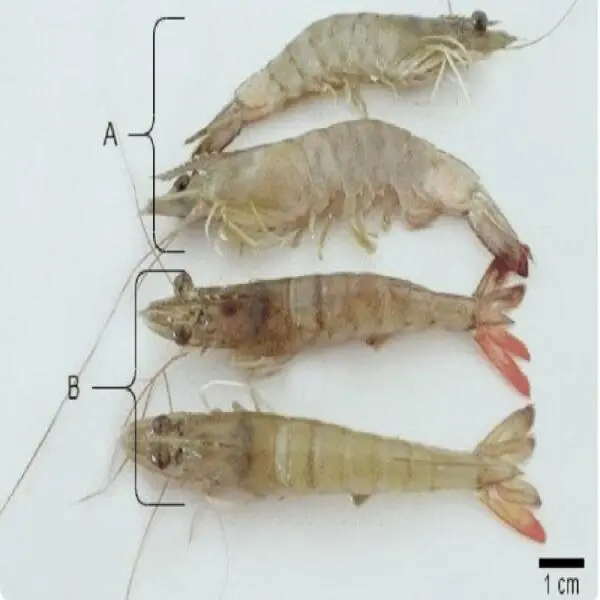
Understanding EHP Disease: A Growing Concern in Shrimp Farming
EHP disease has emerged as a silent yet significant challenge in shrimp farming, affecting shrimp ...
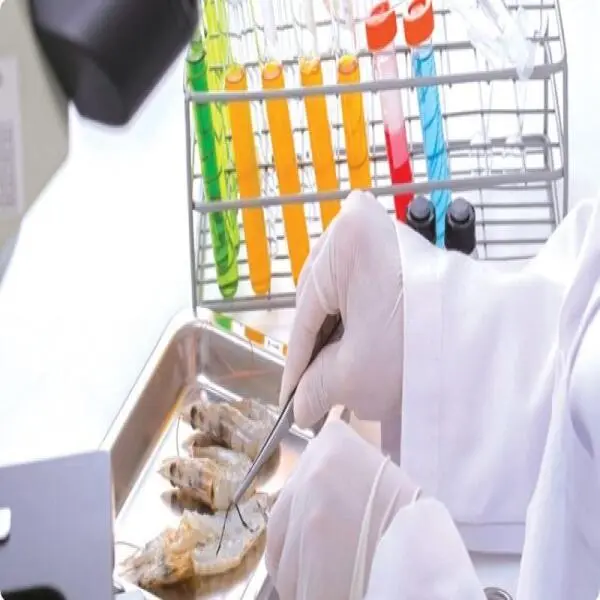
Does Shrimp PCR Testing Really Improve Shrimp Farming Outcomes?
The shrimp farming industry faces numerous challenges, among which disease outbreaks remain a ...
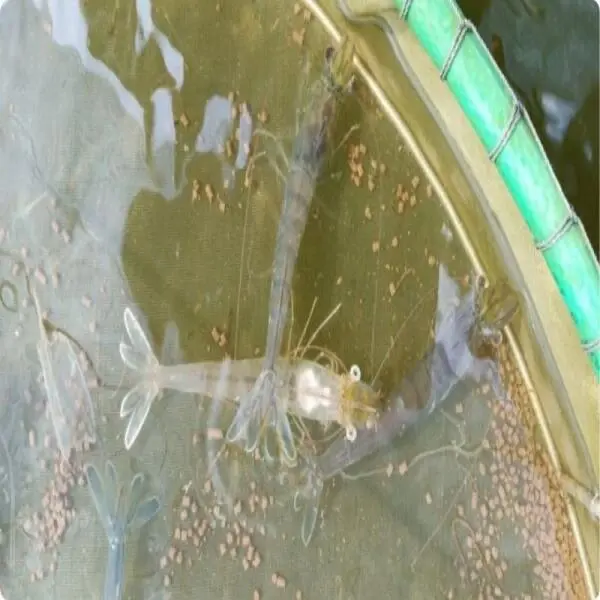
How Can I Improve Shrimp Survival Rates in My Farm? The Path to Success
Shrimp survival is a critical factor in the success and profitability of shrimp farming. The ...
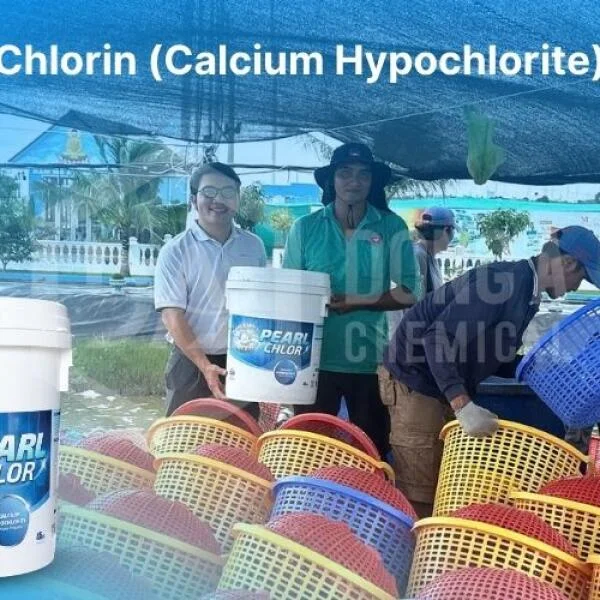
Top 7 Most Common Chemicals for Shrimp Pond Water Treatment
Hello, shrimp farmers! Shrimp farming is often described as a business of taking risks with nature. ...